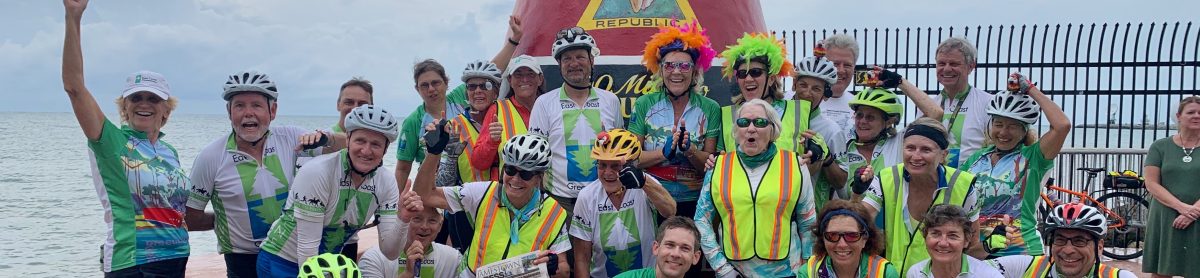
Tobacco Heritage Trail

Here’s my assessment of the Tobacco Heritage Trail.

tobacco heritage trail

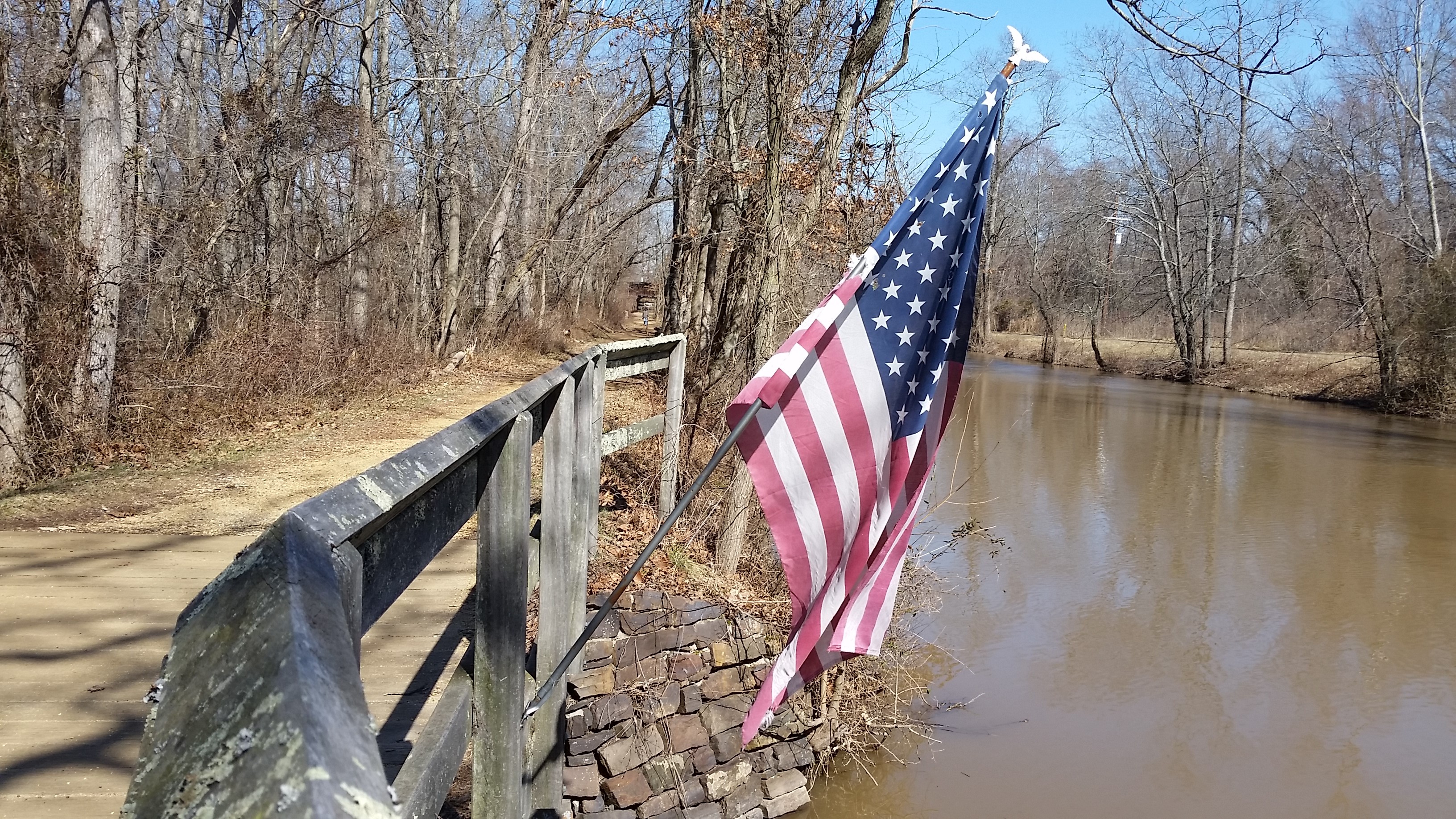
Finally got some trail riding today — we were on the Tobacco Heritage Trail from Lawrenceville west to the end, which seems to roughly be the Lacrosse/South Hill line. Yes, it’s part of the East Coast Greenway.

Here’s my assessment:

Much of the trail we rode is crushed stone and at times became very soft and sandy. I definitely felt it in the legs, and our pace was much, much slower. We were all thrilled when it turned to asphalt. (The trail pamphlet shows a long on-road stretch from Lacrosse west to Chase City.)

The trail amenities we saw are impressive. The bathrooms are these stand-alone structures large enough to accommodate someone in a wheelchair (not that a person in a wheel chair is going to be happy pushing through the soft surface, but maybe it was particularly soft because of the recent storm). Solar panel on the chimney, a motion sensor when you walk in the door that turns on the light. Not some smelly portapotty.

oct 6 2015 019

And I bet the horses love the soft surface. The trail caters to horse riders with these little steps to make it easy to mount your horse, and these places to tie up your horse. Not that we saw any today. Of course you could use this to mount your bike instead:

oct 6 2015 015

oct 6 2015 020

Of course there are picnic tables and historical markers along the trail.

There are few access points on the crushed-stone portion of the trail, unlike, say, the Delaware & Lehigh Trail south of Jim Thorpe. That makes it harder to use it for a short distance.

The Tobacco Heritage Trail hasn’t yet hit that tipping-point length when it becomes a tourist destination. The goal is to reach 150 miles of rail-trail, plus connecting corridors, as funding becomes available. It should be a draw well before then, giving the area some badly needed economic stimulus.

And food? We gave this place behind the trail in Lawrenceville a thumbs up:

lawrenceville restaurant


Day 3 – Quiet roads in rural Virginia from Petersburg to South Hill, Va.

72 sunny miles in rural Virginia

quiet roads2

A long but fabulous day: 72 miles on mostly quiet roads or trails. And sunny. What a contrast to Monday!

We cut Robert E. Lee’s last supply line as we headed south of Petersburg, leaving those chasing Lee and Grant’s ghosts to fade toward Appomattox while we headed southwest to South Hill.

This is rural southern Virginia, where towns have been left behind as the tobacco industry survives on life support and the interstate (I-85 in this case) saps their commercial life. Truly a case where a developed East Coast Greenway could bring some badly needed cash into these communities. We rode some of the time on U.S. 1. Where I live, it’s three scary lanes of traffic in each direction, and you’d be insane to bike on it. Here, traffic is insanely light.

Continue reading “Day 3 – Quiet roads in rural Virginia from Petersburg to South Hill, Va.”

Day 2 – On to Petersburg from Richmond on the East Coast Greenway

Our ragtag group of Northerners and Southerners moved out of Richmond and onto Petersburg.

That's George Washington??
That’s George Washington??

This ragtag group of Northerners and Southerners made a slow advance out of Richmond, first doing a reconnaissance to the rear of our lines to inspect the statues for the Heroes of the Confederacy (clearly Robert E. Lee was the hero, and Jefferson Davis’s statue was pretty puny) and the one for hometown star Arthur Ashe, also on Monument Avenue but set apart from all those who fought for slavery.

Continue reading “Day 2 – On to Petersburg from Richmond on the East Coast Greenway”

Living the hostel life

Hostels have changed a lot — except in one way.

hostel


I haven’t stayed in a hostel since my early backpacking-around-Europe days. But that was the preferred option in Richmond, so I signed up.

Hostels have changed a lot. More private rooms, with bathrooms too. Even in the bunks, they provide sheets and towels — no need for a sheet sack. It’s one toilet and shower per bathroom, so not even what I remember from college dorm life.


hostel group

The Richmond hostel is brand new and is in an old factory that later became a women’s prison. Very hipster, with exposed brick everywhere on the ground floor.

One thing hasn’t changed: You have to help clean up.

ed doing dishes

Bridge out!

We’d been told we could get across this bridge despite the construction. Not so.

bridge out

Coping with the unexpected is part of bike touring. We’d been told we could get across this bridge despite the construction.

Not so.

Not that someone didn’t feel the need to take a closer look.

bridge gaps

The detour added another four or so miles to the day. Total mileage: 77.6.

photos from camera oct 4 026

Day 1 – Bicycling through the battlefields of Virginia

The first day of this year’s East Coast Greenway ride is full of Civil War sites. We were more fortunate than the Union Army, needing only one day to reach Richmond.

Fredericksburg battlefield

One of the great things about touring by bike is that you see so much that you would miss by car. And this area is full of Civil War sites. We were more fortunate than the Union Army, reaching Richmond in just one day instead of taking several years and countless dead and wounded. But biking more than 70 wet miles means we didn’t have time to really see the sights. Even taking photos tended to be hurried.

Fredericksburg is the site of a couple of Civil War battlefields (referred to on one sign as the first and second battles of Fredericksburg, but the second one is better known as Chancellorsville).

The gray mist over these cannons set the appropriate mood. The first battle was in December 1862, and as we biked past where North and South had fought, I could only think of how cold and wet it must have been. We were dealing with rain, but at least we have waterproof jackets and warm, wicking fabrics.

Chancellorsville is where Stonewall Jackson was mortally wounded by friendly fire, and the East Coast Greenway route goes past the spot where he died. Turns out that’s now part of the National Parks Service. Continue reading “Day 1 – Bicycling through the battlefields of Virginia”

Best way to start a ride

Ready to head out on Day 1, fueled by leftover Chinese food.

Chinese food

Give me leftovers over breakfast food any day. Great fuel for a bike ride! (Not that some people at breakfast agreed. Yes, I mean you, Bob.)

Two of us tackled the leftovers from Peter Chang’s (unrelated to PF Chang’s).

Others turned to Alan, our mechanic, for last-minute adjustments.

photos from camera oct 4 015

Final countdown

Ready for day 1 of the East Coast Greenway ride.

3 bikes

You know you’re in the south when you find shrimp and grits on a cafe menu. That for lunch, szechuan Chinese for dinner. But too much rain to tramp around battlefields. Ready for Sunday’s 72-mile day.

Scored some 20% off coupons for REI. Who wants one?

Getting ready to ride

I start riding on Sunday. Thank you for your support.

East-Coast-Greenway-logoWe start biking on Sunday. A huricane is coming up the East Coast right now, and I am keeping an eye on it, hoping it weakens and continues to veers east, leaving us dry (or pretty dry) on Sunday. I am not looking forward to a 70-mile ride in the rain!

I want to once again that everyone who is supporting me on this ride, particularly those who have donated so generously to advance the work of the East Coast Greenway Alliance. (Haven’t donated and want to? Click here.)

Building the Greenway is hard work, as I have said before, and it can seem like forever. Even though we know more people will bike if they feel safe because they’re away from traffic. Yes, the Greenway is only 30% off road right now. But this project is incredibly complicated and involves countless partners at so many levels of government. Even something as seemingly simple as signage isn’t simple. (I’ll spare you the details.)

I want to leave you with some factoids to put this effort in perspective.

The Appalachian Trail, a marked hiking trail, took 75 years to build. It skips urban areas.

The Blue Ridge Parkway? Congress authorized this 469-mile roadway in 1936. The last section opened in 1987. That’s more than half a decade for a project with clear government backing from the top.

The Natchez Trace is based on an old forest trail going back to the Indians. Even so, it took even longer to build. But construction of this 444-mile parkway began in 1938 and was finished in 2005. Like the Blue Ridge Parkway, it’s operated by the National Parks Service.

The East Coast Greenway will be a national treasure. And you are part of it.