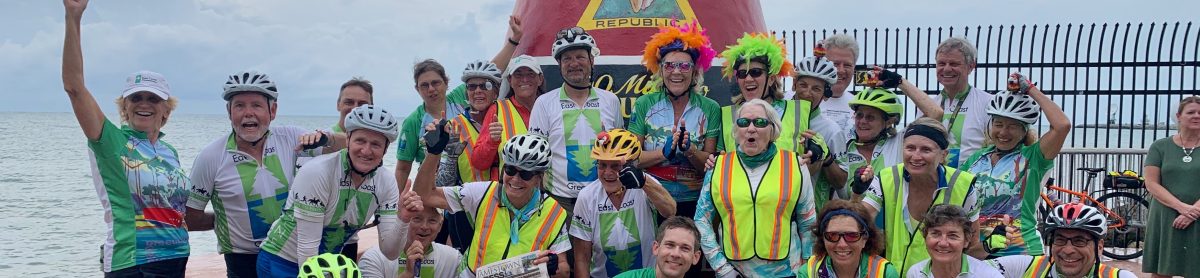
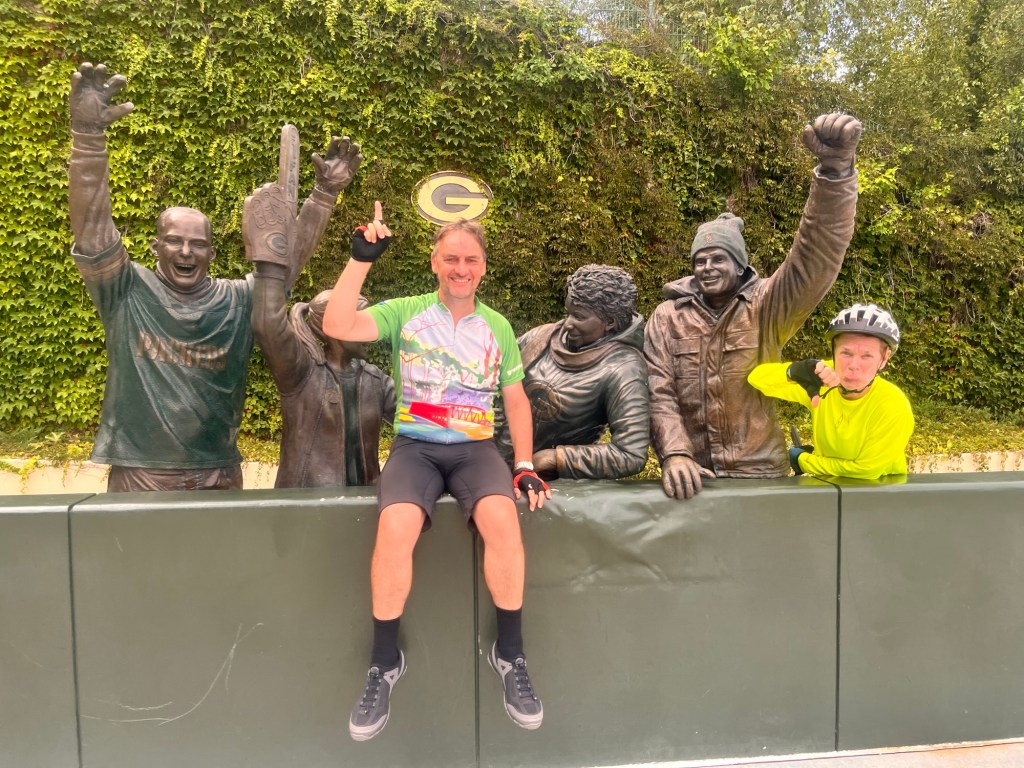
Does anything say “Wisconsin” more than Lambeau Field? Along with a supper club and cheese curds, of course.
We wrapped up 335 miles of pedaling from Milwaukee to and around Door County to Green Bay in front of Vince Lombardi, Green Bay Packers co-founder Earl Lambeau and the Lambeau Leap.
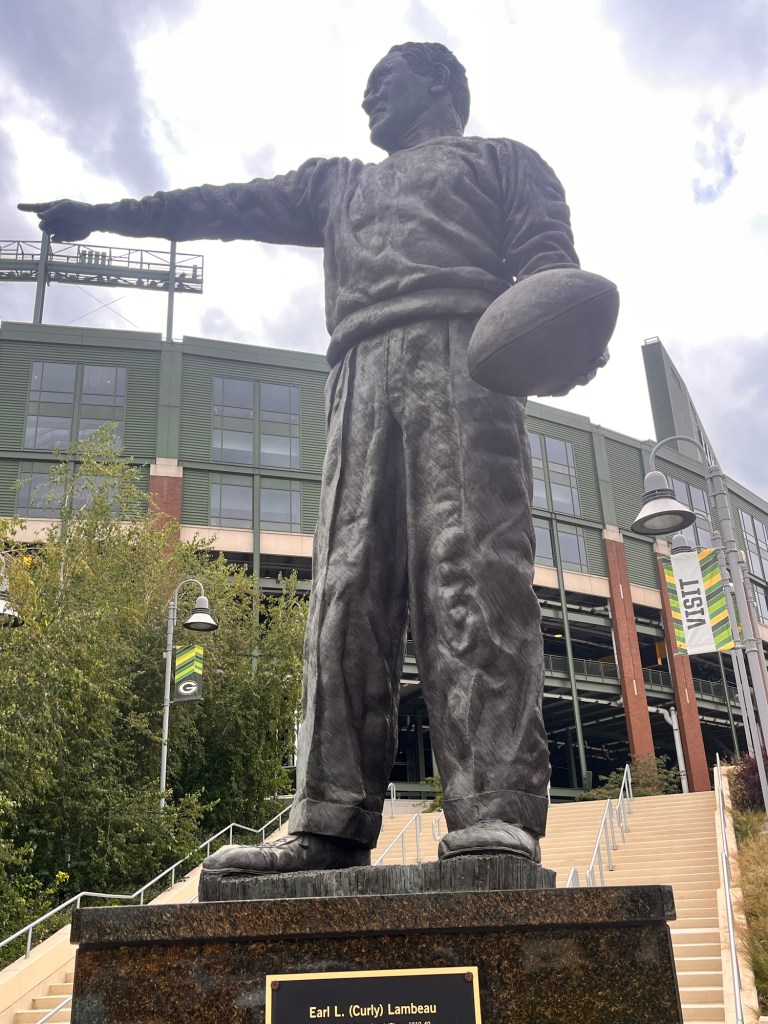
Over six days, I got a small taste of the ways in which Wisconsin is different from the other 49 states. I waded into the vastness of Lake Michigan with no opposite shore in sight, climbed the amazing Eagle Tower for its sweeping views over the tree line of the Bay of Green Bay and way off in the distance of Michigan’s Upper Peninsula, pedaled past countless corn and soybean fields and even beer gardens in Milwaukee County parks, ate a one-pound prime rib at a supper club, and so much more. You say we missed the so-Wisconsin thing of eating bratwurst? That came when we returned to Milwaukee. Unless you count the giant sausage at the BBQ dinner on day 1. Which I know … no.
(You can read the individual trip reports for day 1, day 2, day 3, day 4 and day 5.)
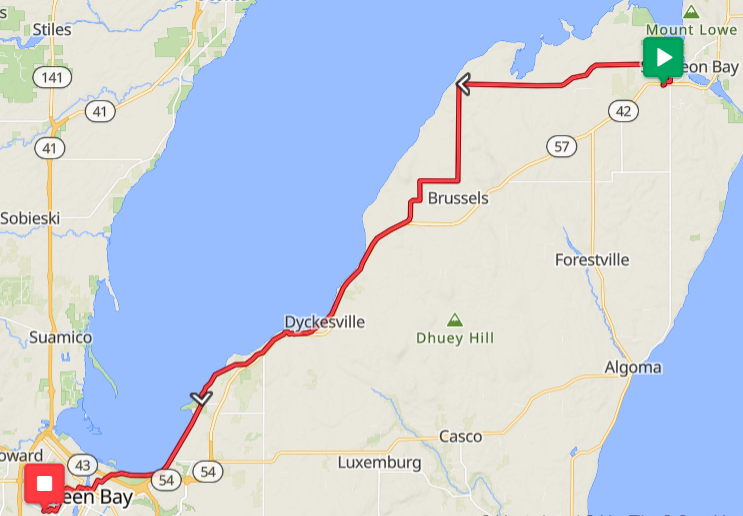
On our final day, which began in Sturgeon Bay and totaled more than 50 miles, we got a quick lesson in one wave of U.S. immigration and the search for a better life. We pedaled through tiny Namur (pronounced Nay-mer), named after a much, much larger city in Belgium that’s now the capital of the French-speaking Wallonia district. (There it’s pronounced Nuh-moor).
Back in the 1850s, times were tough in Belgium. (Sounds like certain countries today). Wisconsin, which had become a state in 1848, advertised cheap land for farming. Bit of false advdrtising there … the land first had to be cleared of forests, as the first Belgian immigrants discovered in 1853. And the weather was harsher than in Belgium. An eternal lesson: the streets are not paved with gold.
But clearly many persevered (or at least theirs are the stories that are told). And Wisconsin needed them.
We learned all this from historical markers outside the Belgian Heritage Center in Namur, just a few miles west of … Brussels.
And here I thought Wisconsin immigrants were just German.
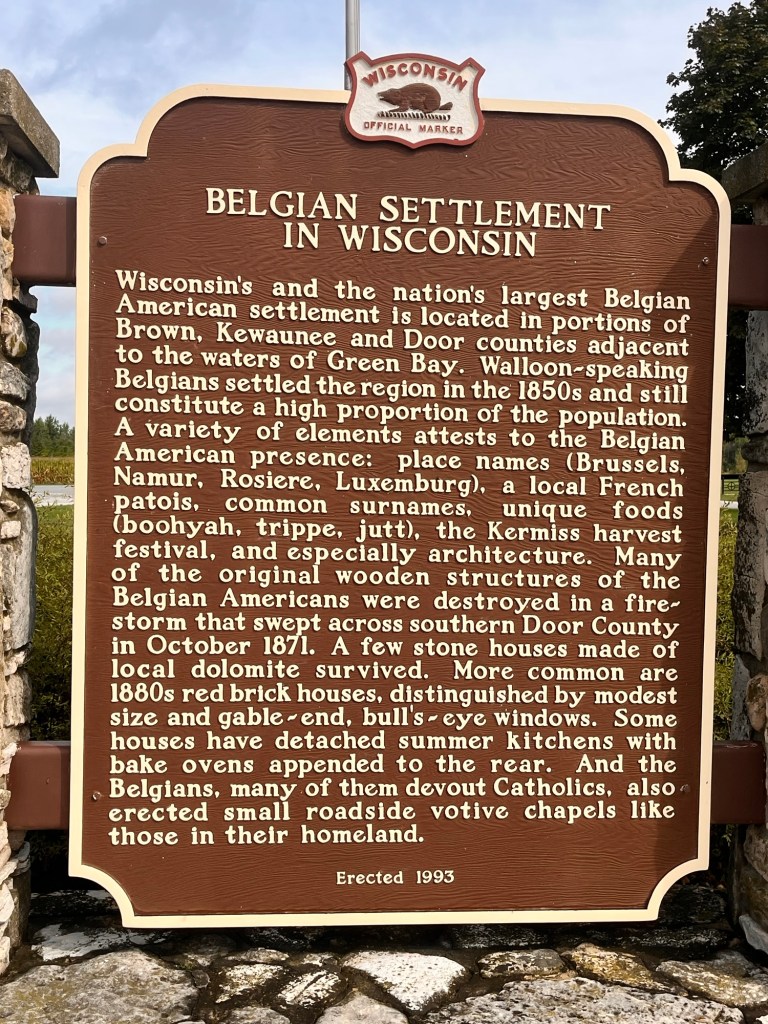
Trivia: That 1871 fire was the same day as the better-known Great Chicago Fire and was more deadly; it killed between 1,200 and 2,500 people. Other signage calls it the deadliest U.S. natural disaster ever. Not at the low end (Hurricane Katrina killed 1,392) but I won’t argue otherwise.
What else did we spot?
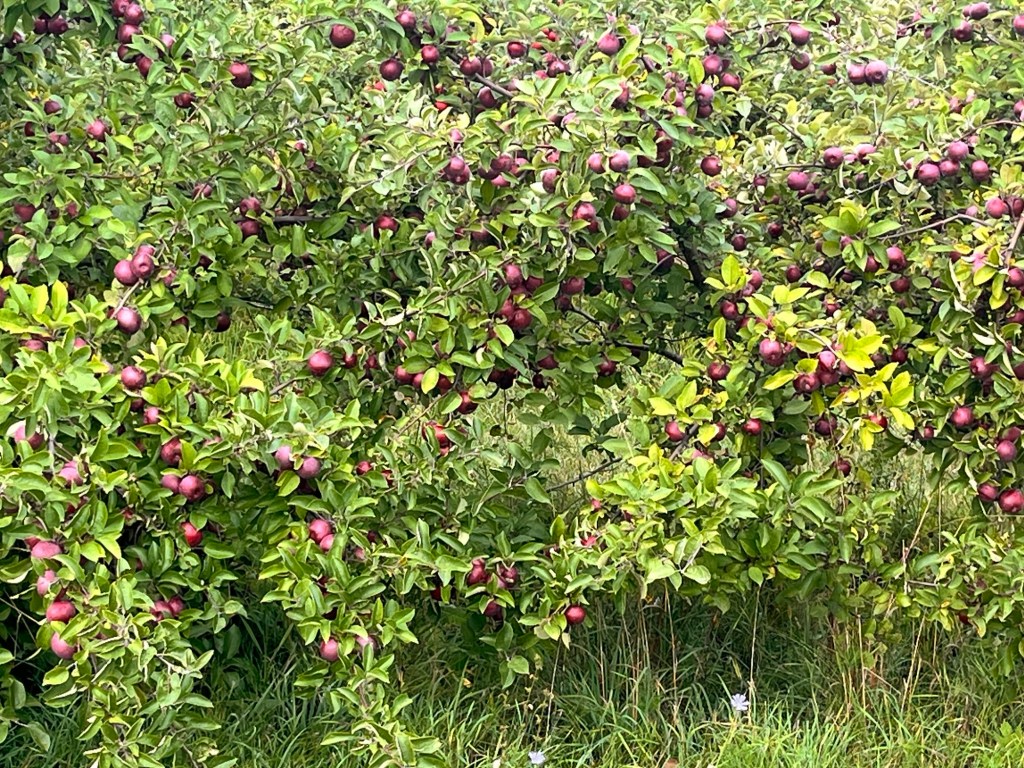
I’ve never seen purple apples before, and I was too polite to swipe one and taste it. Maybe this is a Spartan apple? An Arkansas black? Anyone know?
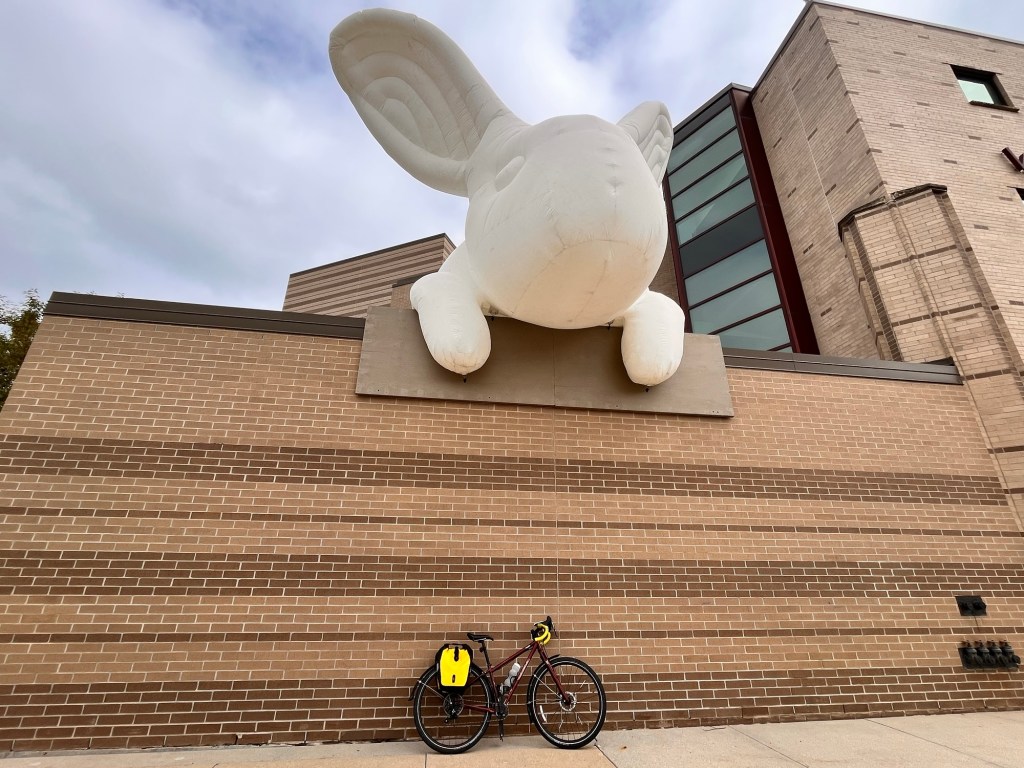
And this is part of a temporary art installation on the campus of the University of Wisconsin-Green Bay.
Overall, bicycling in Wisconsin was a treat. The rail trails (of which there are far, far more than we experienced), the quiet roads, the regular views of enormous Lake Michigan and being able to at least wade in to cool off.
I’m heading home with two jars of cherry salsa, ready for a taste-off. And memories of the one-pound prime rib. I’d go back just for that. Just don’t tell my doctor.


