I have two three pieces of advice for anyone thinking of going to Normandy and the D-Day beaches.
- Of course you should go. And the best way to experience the beaches is by bike. E-bike counts. It’s the perfect pace.
- Low-ball your mileage. You will stop a lot, take a detour or two, spend more time in one spot than you expected. Do not rush.
- Expect to wipe your eyes at least a few times.
We arrived just over a week before the 82nd anniversary of the landings and spent two full days cycling. Day 1 was for Omaha Beach. Day 2 was devoted to the British and Canadians. Honestly, we could have easily spent a third day and gotten to Utah Beach.
On both days, we spent much of our time pedaling on paths along the cliffs above the sea or close to the beaches. I thought a lot about the chaos of that day, the fear, the bravery, the thousands of dead but also about all that had to go right (or close to right) for the invasion to succeed. Nothing goes entirely as planned, but imagine our world today if D-Day had not succeeded.
Thankfully, the tourism people have made it very easy to do DIY bike rides with little planning. Two loop routes leave from Bayeux — one to Omaha Beach (39 km) and the other to Arromanches (Gold Beach) and east (24 km). Plus there’s the one-way 1944 Route going from Pointe du Hoc to Arromanches (45 km). For those on longer tours, the routes overlap with Eurovelo 4, La Velomaritime.
A brochure showing all this was available at the Bayeux train station (right by the ticket office) as well as at tourist information in the heart of town. We also found this sign:
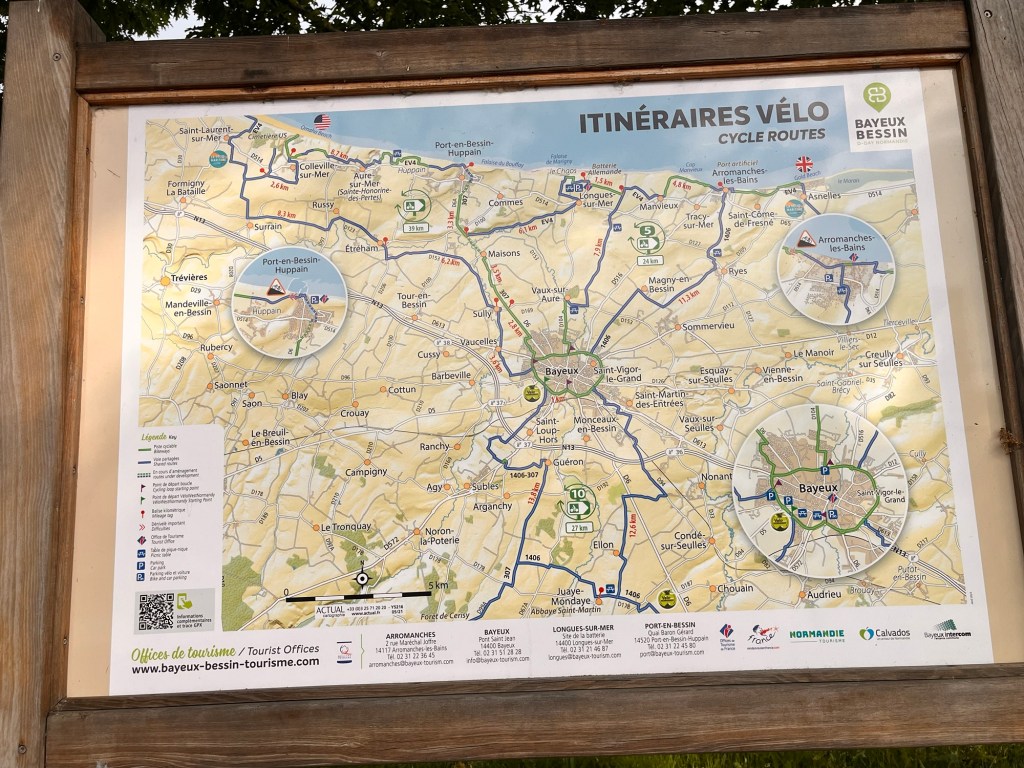
The routes are beautiful. When you’re not on a bike path, you are on small country roads going past fields, old churches, stone houses, the odd manor house. The signposting made it almost(!) impossible to miss a turn. The weather was perfect.
We added miles each day. Pointe du Hoc, for example, was several miles west of the 39-km loop, easily reached on a car-free path along the cliffs.
Here’s one thing that surprised me: We never went into the many museums that honor some aspect of the invasion. Yes, we had planned on a couple, but we found ourselves spending so much time at the different memorials that we simply ran out of time.
Oh the memorials! Seemingly every division and no doubt every country involved has one, and some really pull at your heart (or maybe I am just too emotional). Many were not there when I visited D-Day more than 30 years ago, and I know we did not see all of them.
The memorials
One of my favorites was at Arromanches. Called D-Day 75 Garden, it features a sculpture of a real 97-year-old British D-Day veteran looking back at his memories of June 6, 1944. How can you not feel with him?
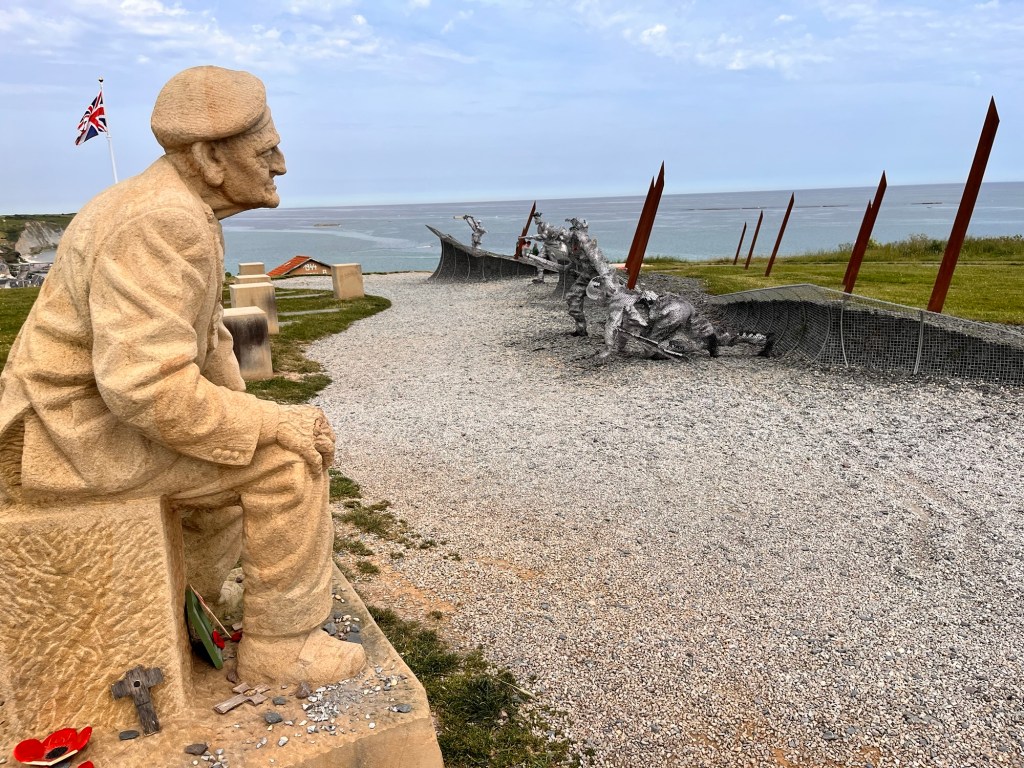
Those sculptures are semi-transparent, using steel washers, and not fully formed, as if they are fading away. Perhaps a warning to us against forgetting what happened here?
Weird fact: This installation was debuted at the very fancy Chelsea Flower Show in 2019 (the 75th anniversary of D-Day) before being gifted to Arromanches.
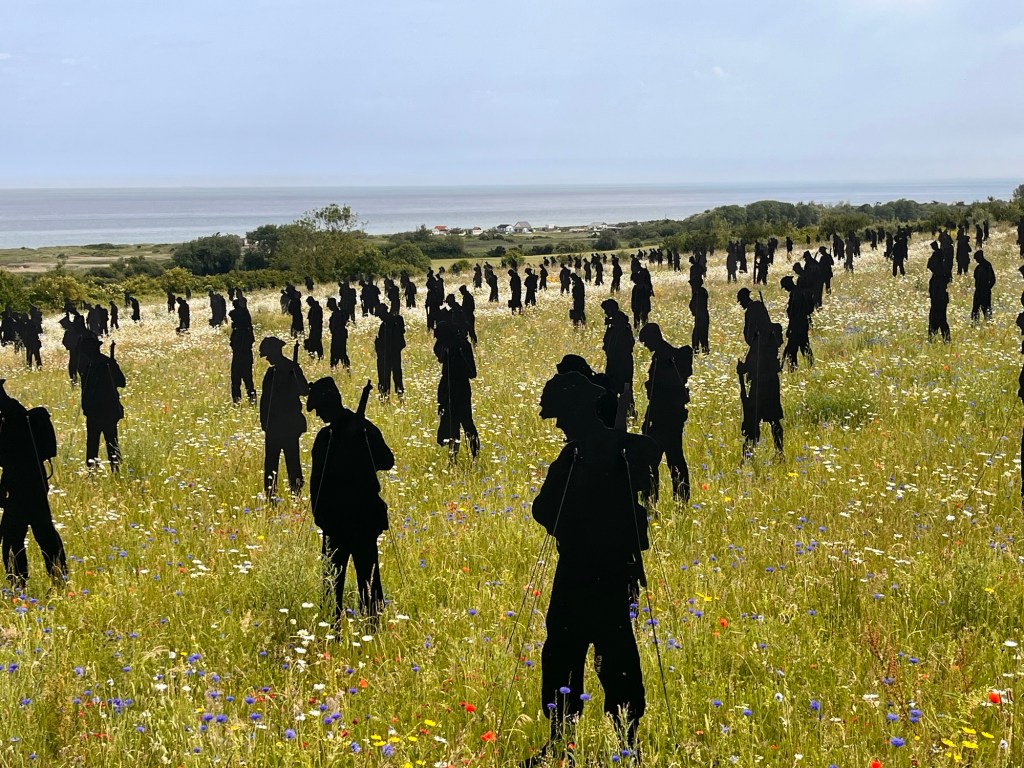
I also could not get enough of the Standing With Giants installation at the British Normandy Memorial about 6 miles further east. Going to this memorial, which opened in 2021, was a spontaneous detour and one I am thankful we took.
The photo at the top is from there, but here are more:
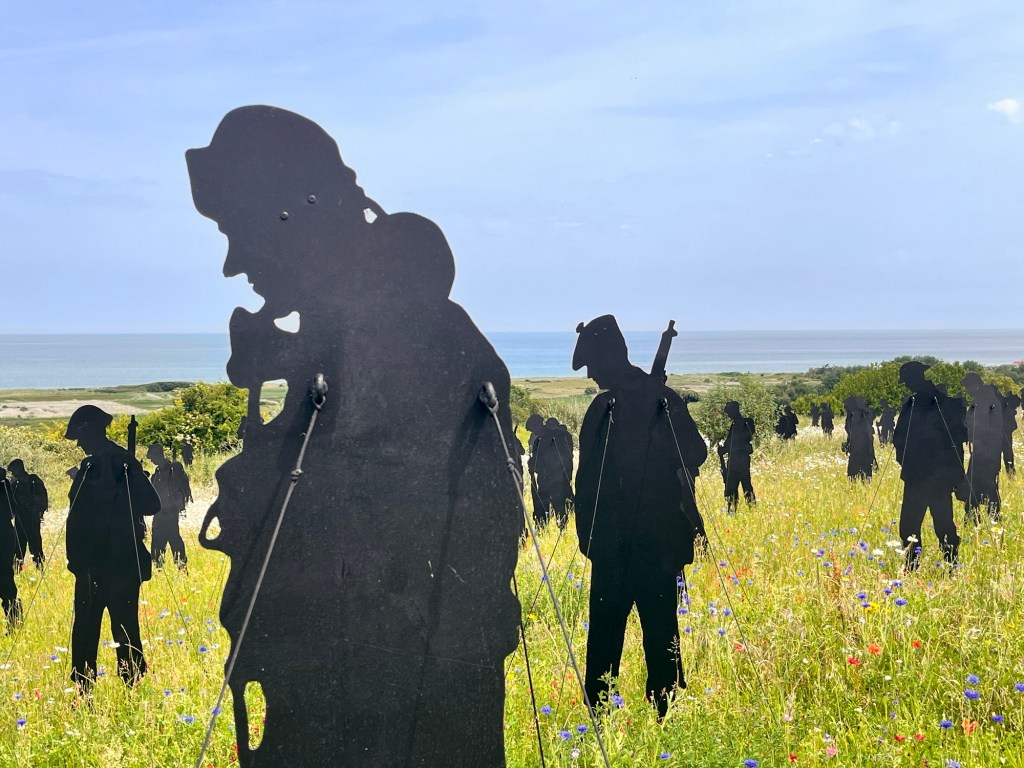
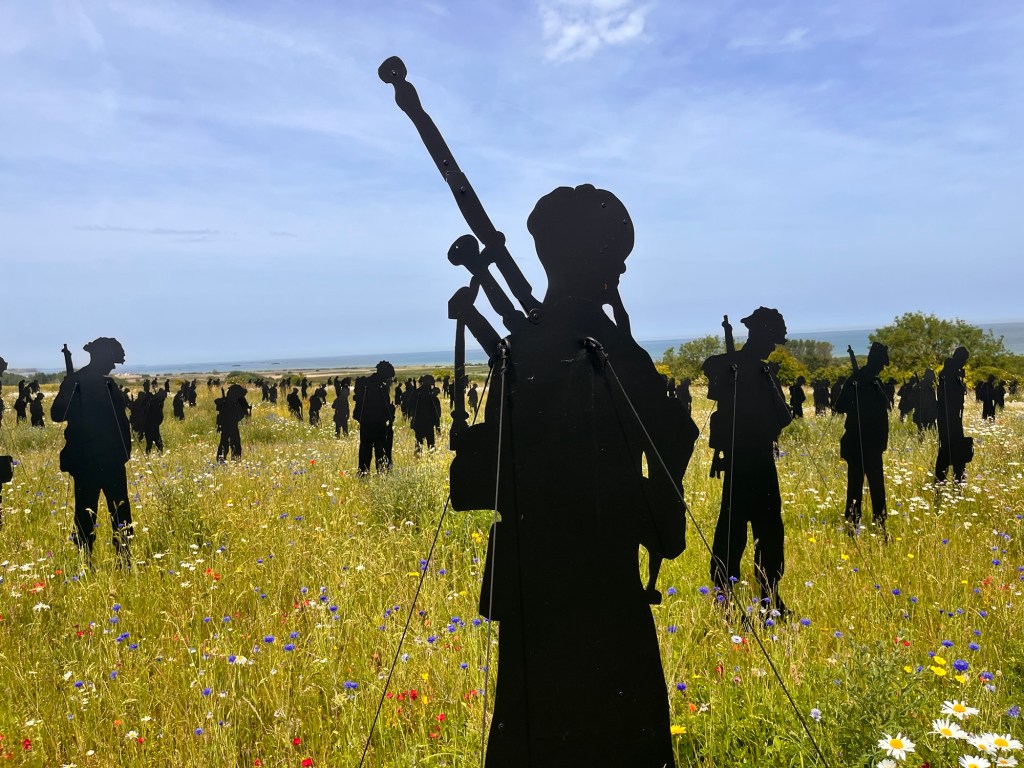
You can’t walk among the 1,500 or so life-sized silhouettes, but the scale of this plus the notes from veterans or family members honoring the fallen can’t help but move you.
You also can get your TL;DR summary of the 100 days that liberated Normandy at the memorial. What a history lesson. And then to see the day-by-day British death toll, with names and ages, on the pillars there. Another wipe of the eyes.
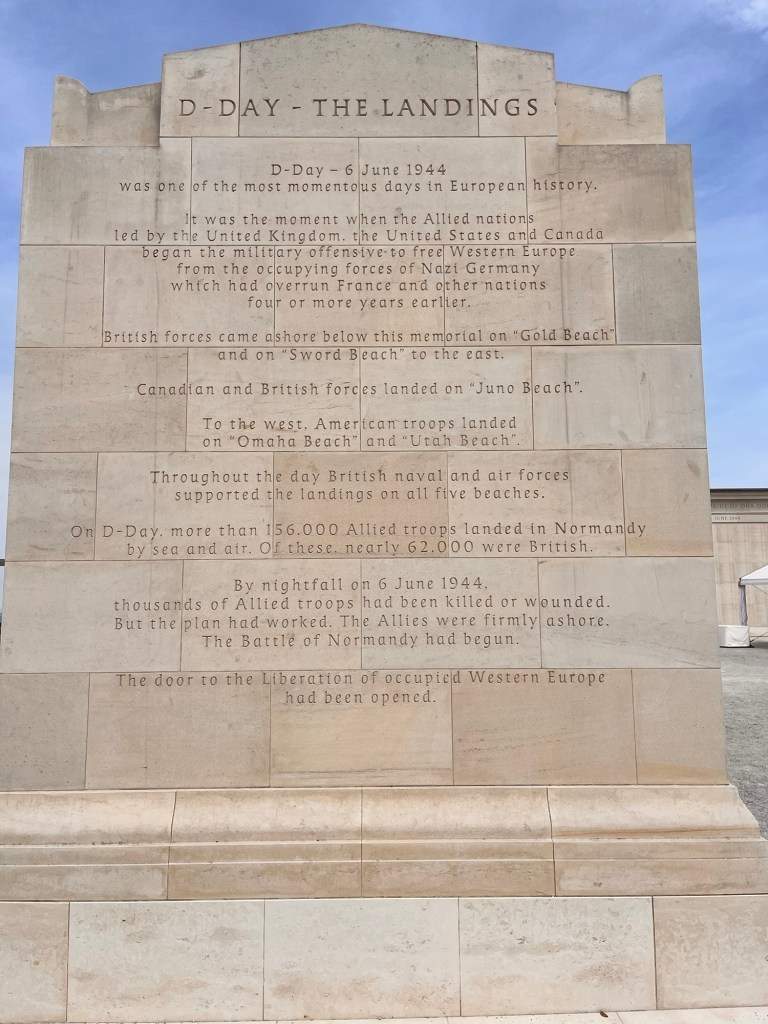
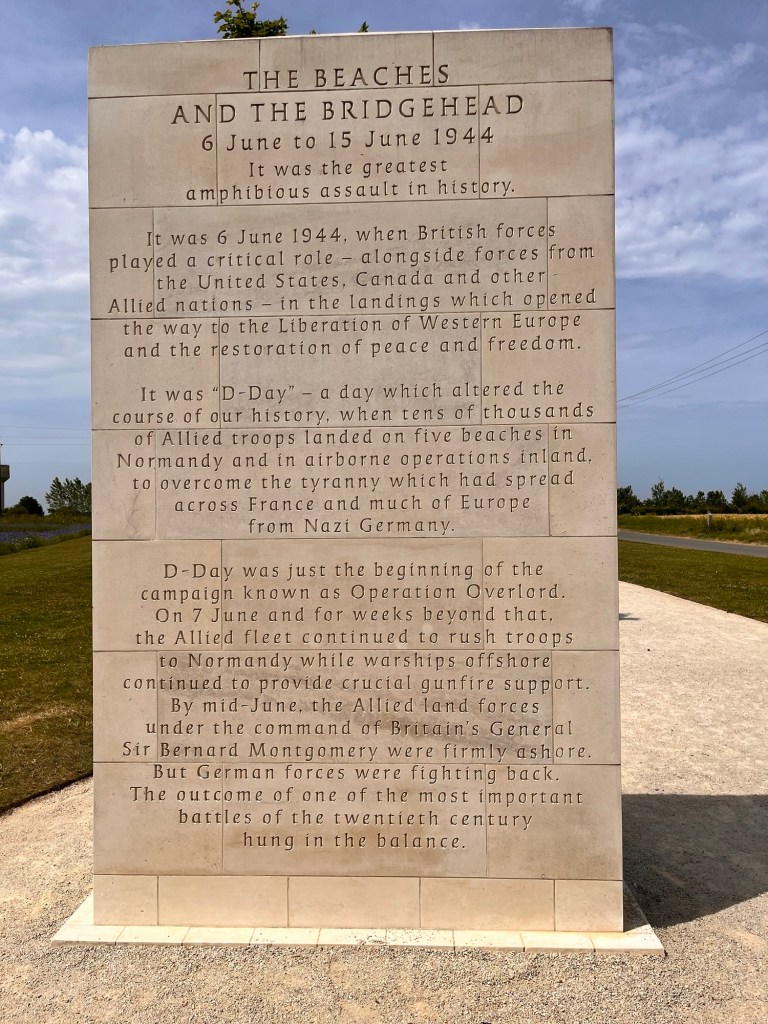
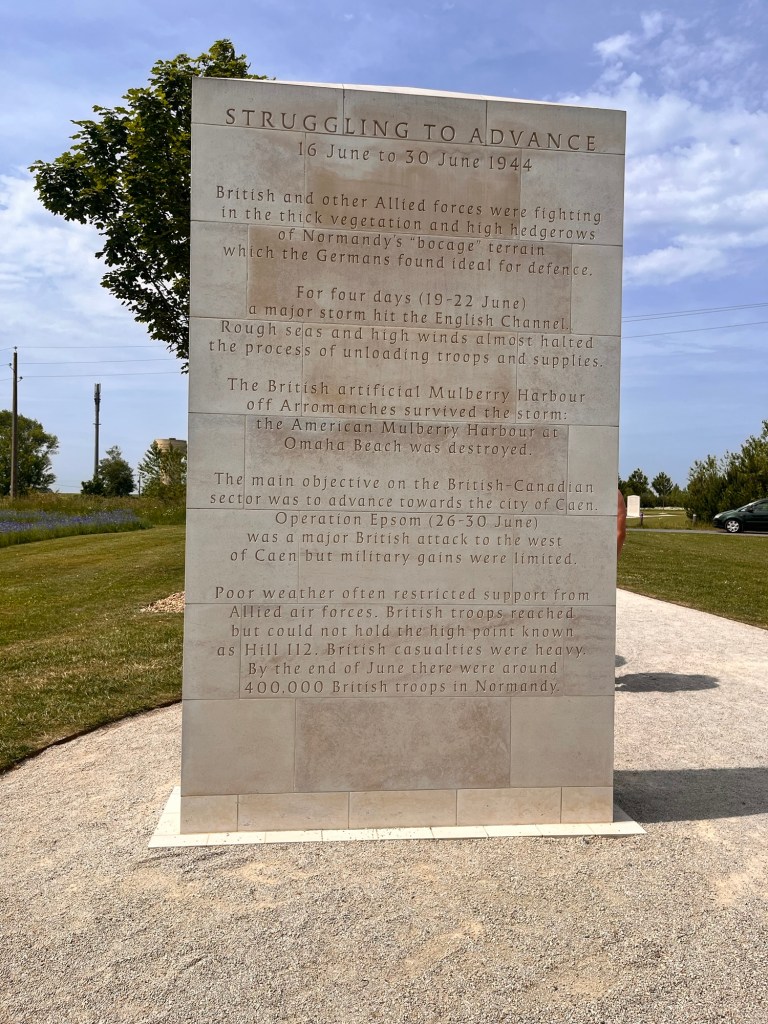
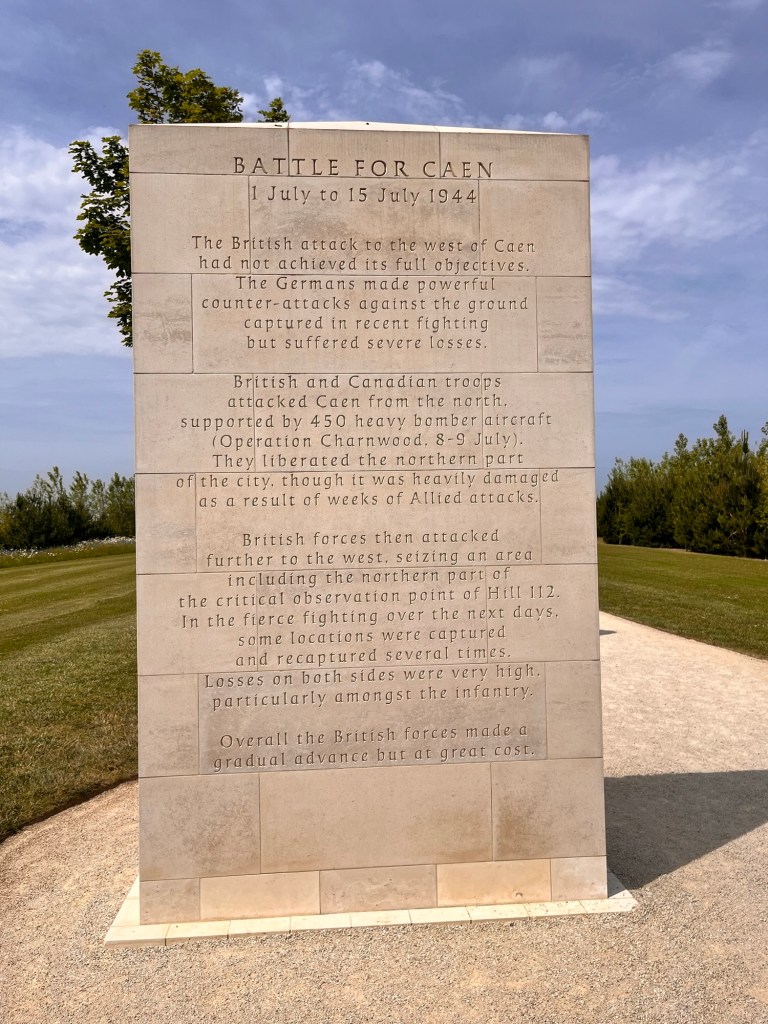
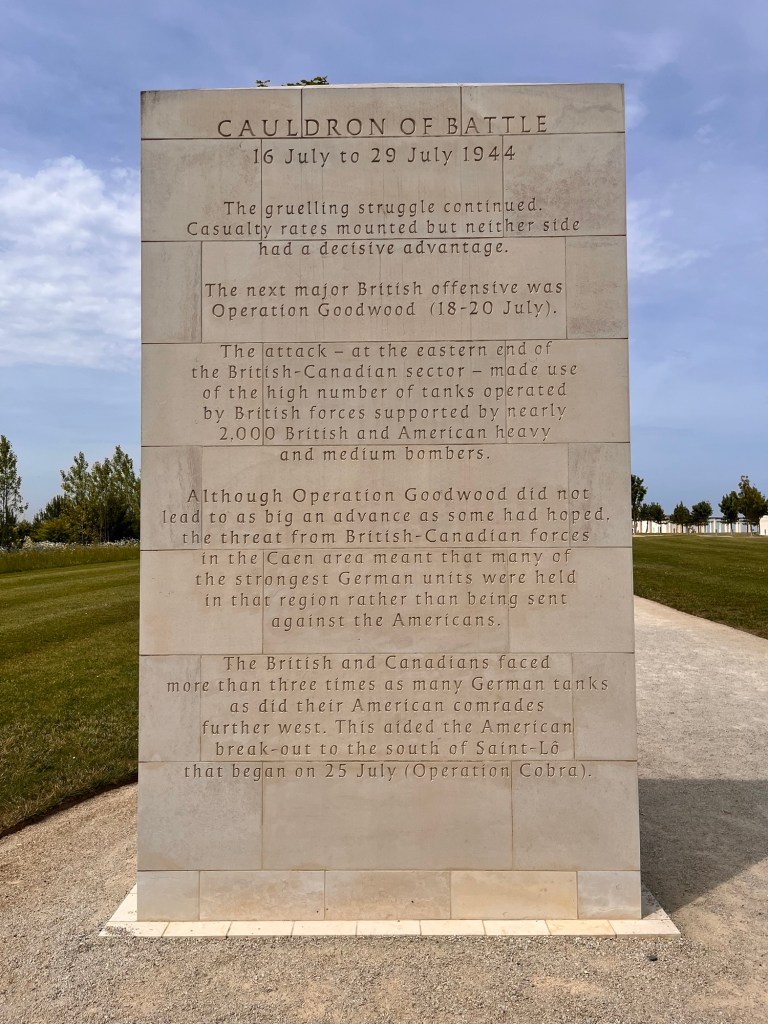
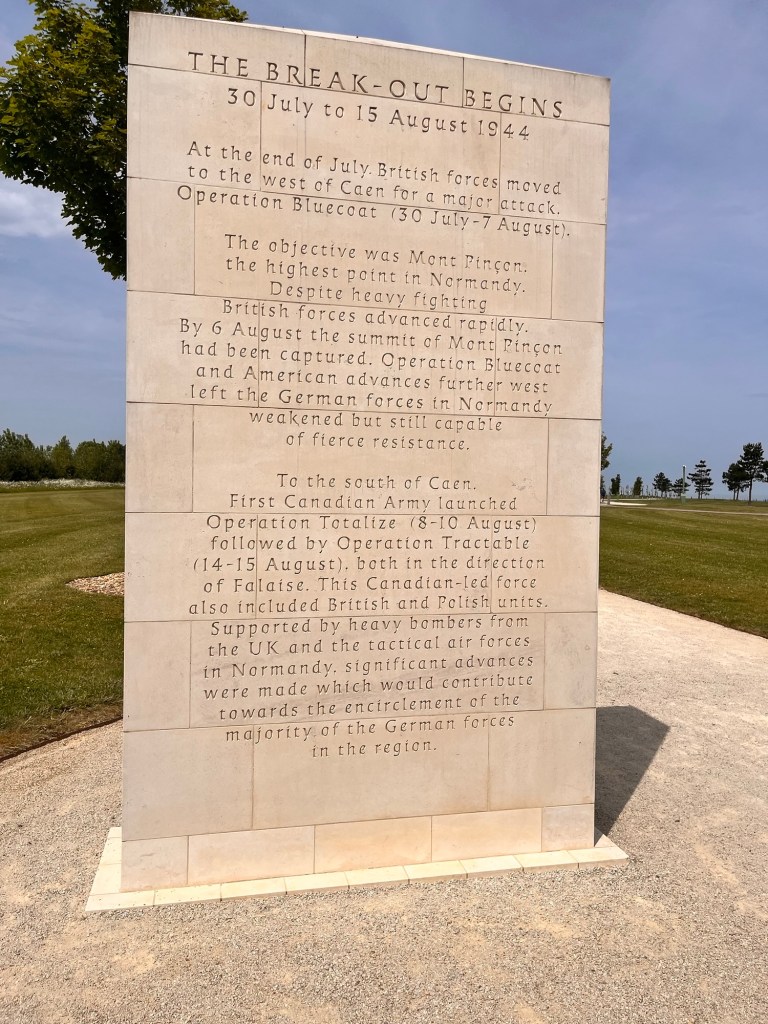
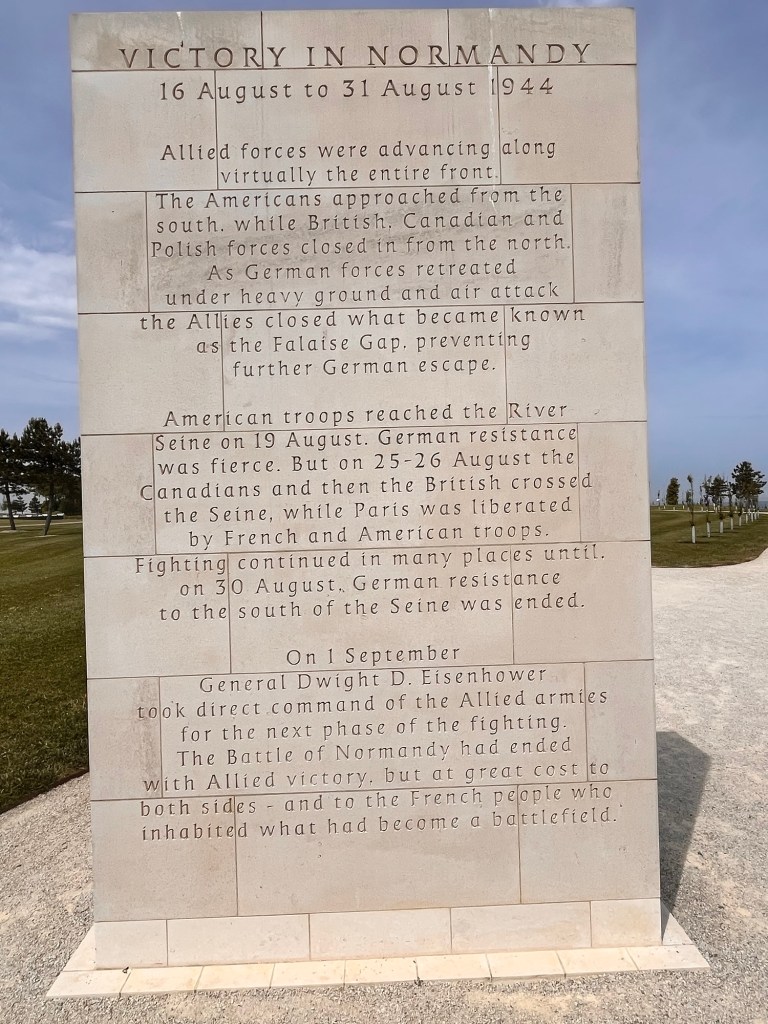
Although we didn’t go into museums, we learned plenty from other memorials and markers. The airstrip in Sainte-Laurent-Sur-Mer, just up from Omaha Beach, that was built in about 36 hours starting two days after the landing, and now once again a field. The two temporary harbors known as Mulberry harbors, of which the remains of one (at Arromanches) is still visible (the other was destroyed in a storm shortly after D-Day). Ham and jam, the code phrase used by the British to tell HQ that British fighters arriving by gliders had captured two crucial bridges on the way to Caen hours before the landings began.
That would be Pegasus Bridge, and it’s a story Brits know well. A lesson for everyone else: Don’t go running out in the middle of the night to welcome your liberators. You could be shot and killed, like the owner of a nearby cafe (according to one marker).
We also went to the U.S. cemetery (overlooking Omaha Beach) and the British one (in Bayeux). The U.S. one is pretty stark: rows and rows of white crosses and sometimes a Star of David, one for each of the 9,000+ buried there. I later learned that President Theodore Roosevelt’s son Theodore Roosevelt III is one. He was a 56-year-old brigadier general with a cane who directed troops landing at Utah Beach on D-Day. He died of a heart attack one month into the Normandy campaign.
While sections of the U.S. cemetery are roped off, the British one — really one for the Commonwealth plus a few stragglers — is easier to wander through. Every once in a while, there’s an extra marker telling you more about the person who died. An extra pull at your heart too. Nicer plantings than the American cemetery too.
France is seeking to have the D-Day beaches declared a UNESCO World Heritage Site. Seems like an obvious choice to me.
What else?
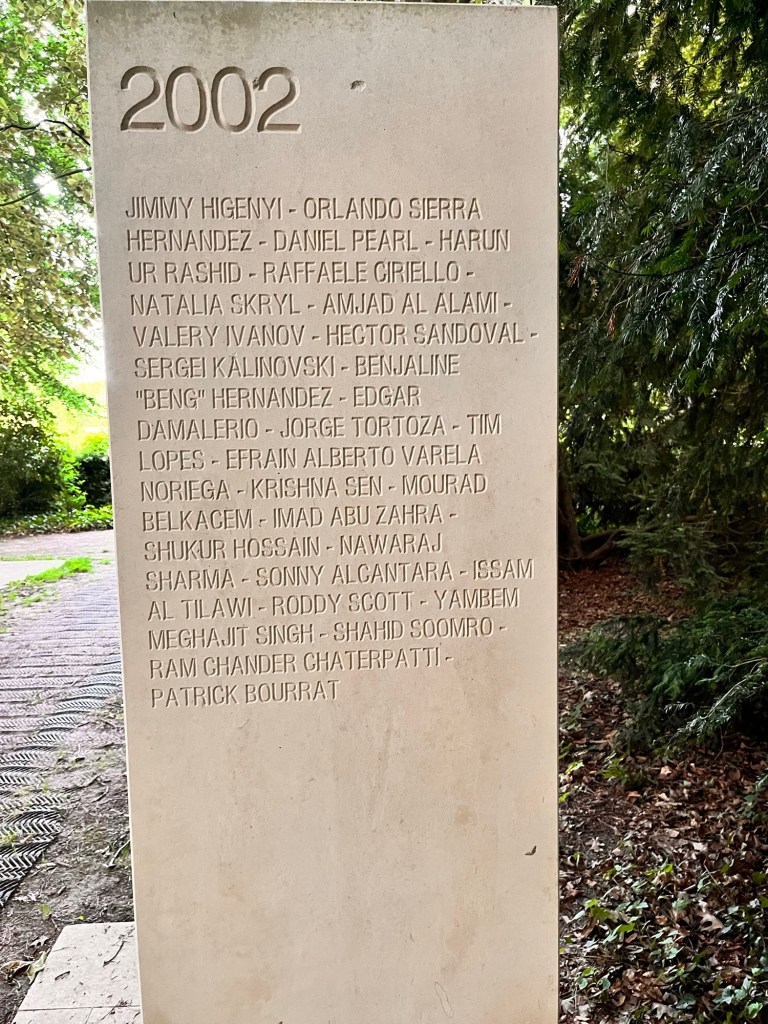
When I learned that Bayeux has a memorial to journalists killed, I knew I needed to seek out. 18 columns (I think) with names on both sides aside from the last, saved for 2026 and however more years for which there is room.
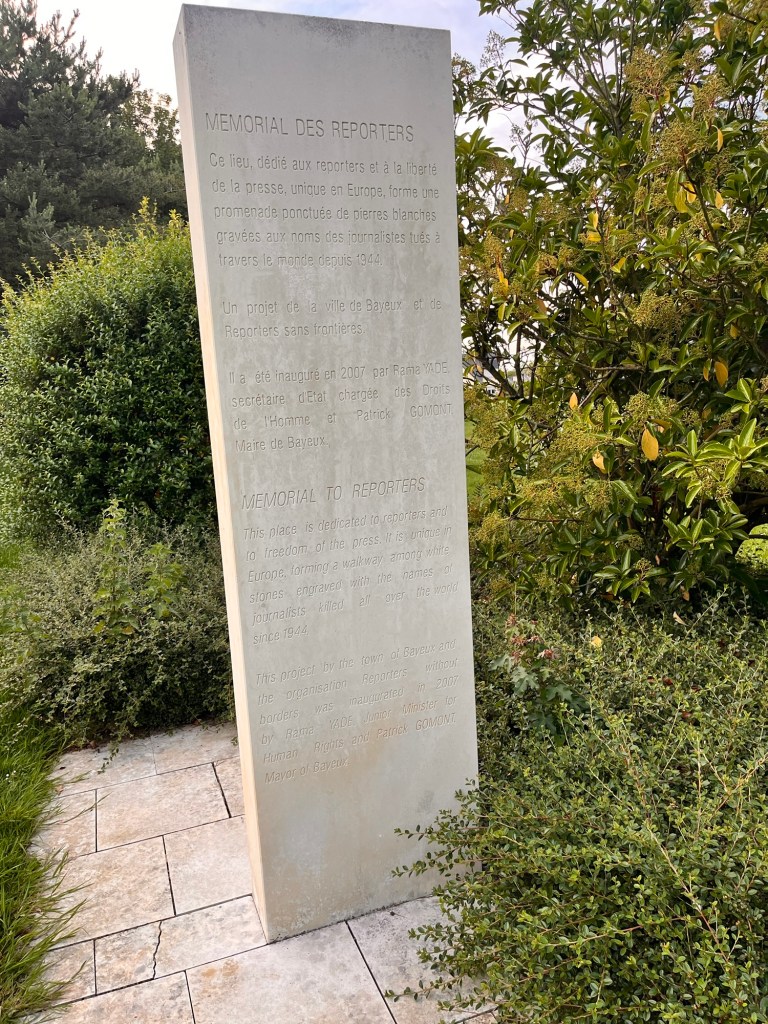
Ernie Pyle, a well-known World War II correspondent who died in action, is on there. I looked for Danny Pearl, a colleague brutally murdered by Al-Qaeda.
Finally, expect to come across people zipping around in old Jeeps and otherwise cosplaying 1944. Hey, if that’s your thing…
Practical stuff
We based ourselves in Bayeux, the first town liberated (the morning of the day after). Not only was it spared destruction but the British then built a ring road -so tanks and trucks could bypass its old, narrow streets. The result is an unscathed, charming core.
We rented an apartment just inside the bypass. Just 0.8 miles from a large grocery store, reachable on a bike path. It’s the same bike path that took us to the Commonwealth Cemetery, the Memorial to Reporters and toward Omaha Beach. It also was an easy walk to the center of town.
Bayeux is on the Cherbourg-Caen train line (we took the train after arriving in France by ferry) and also has service to Paris Saint Lazare. Just know that if you’re getting off in Bayeux, the train only stops for a few minutes. Be quick!
Had we planned the trip differently, we could have explored biking from Cherbourg to Bayeux, which would have let us go to Utah Beach and Sainte-Mere-Eglise. There are several train stations along the way as well.
Unfortunately, there’s no nice bike route between Caen and Bayeux. We took the train back to Bayeux at the end of our second day. We had considered eliminating one night in Bayeux and instead biking with gear on the second day so we could end in Caen. But I’ve become a fan of basing ourselves in one spot for several days (see our trip to the Loire) and not always having to think about what to do with our bags whenever we stop. Plus Bayeux is just prettier than Caen.
Those preferring to camp will find many options, including sites just above the landing zones. You can also find some home rentals facing the beaches.
We brought our own bikes, but Bayeux has several rental options.
Here are some of the lessons I’ve learned while DIY biking in Europe.


Dear Silvia,Your poignant descriptions brought tears. I was 7 years old!!LouiseOn Jun 20, 2026,
LikeLike