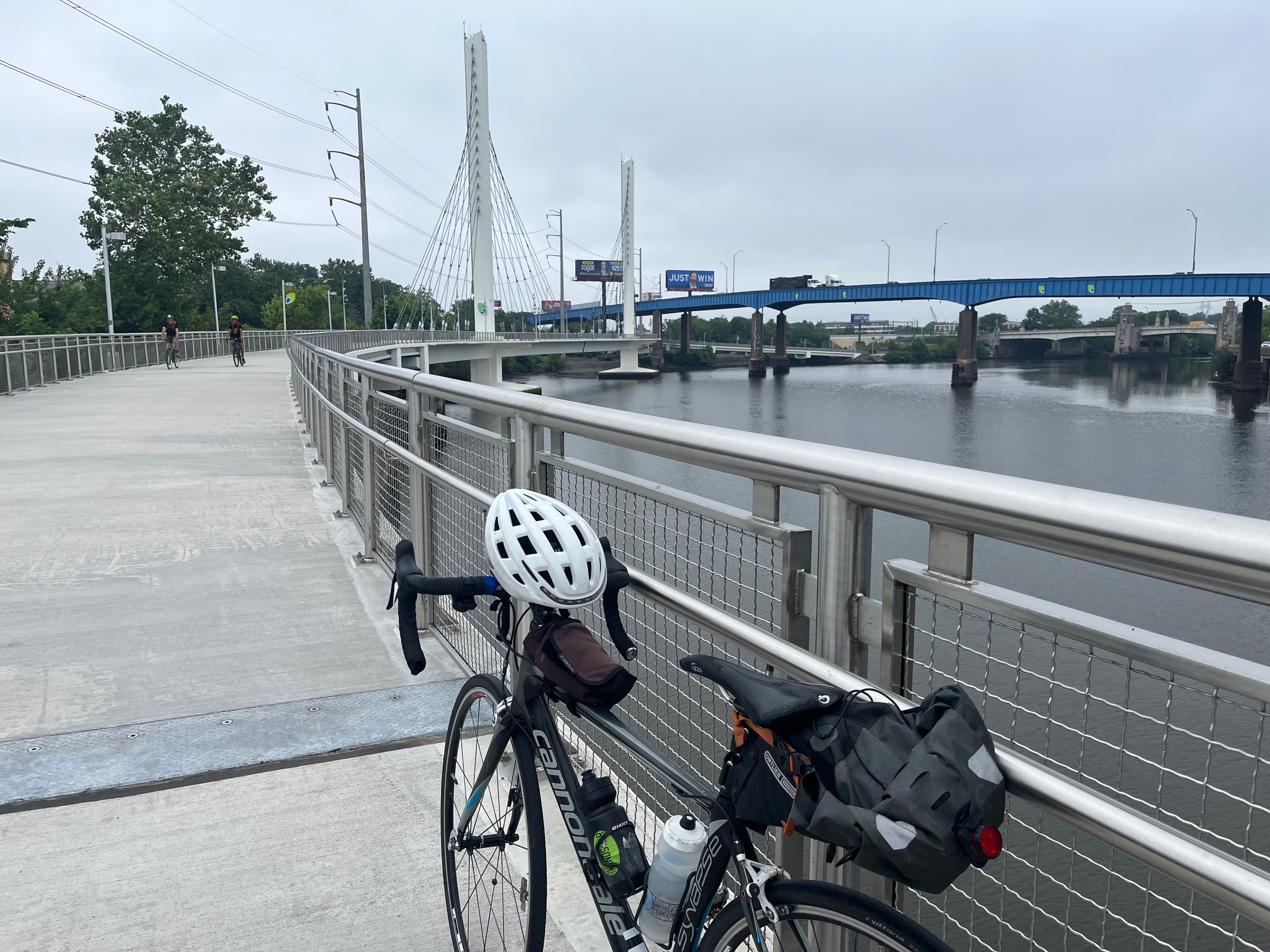
A month after the ribbon cutting, I finally was able to check out the latest extension to the Schuylkill River Trail — the gleaming white Christian to Crescent section that juts above the water.
The SRT is slowly making its way downriver in Philadelphia, and this section closed one gap. Next up: a swing bridge that will get cyclists, walkers and runners across the river. It will connect to an existing section of trail with a goal to eventually reach Fort Mifflin and the Delaware River.
When you are there, you realize why this section, like one in the heart of Center City, had to be built above the water. There’s simply no room on land. Lots of old industrial Philadelphia.
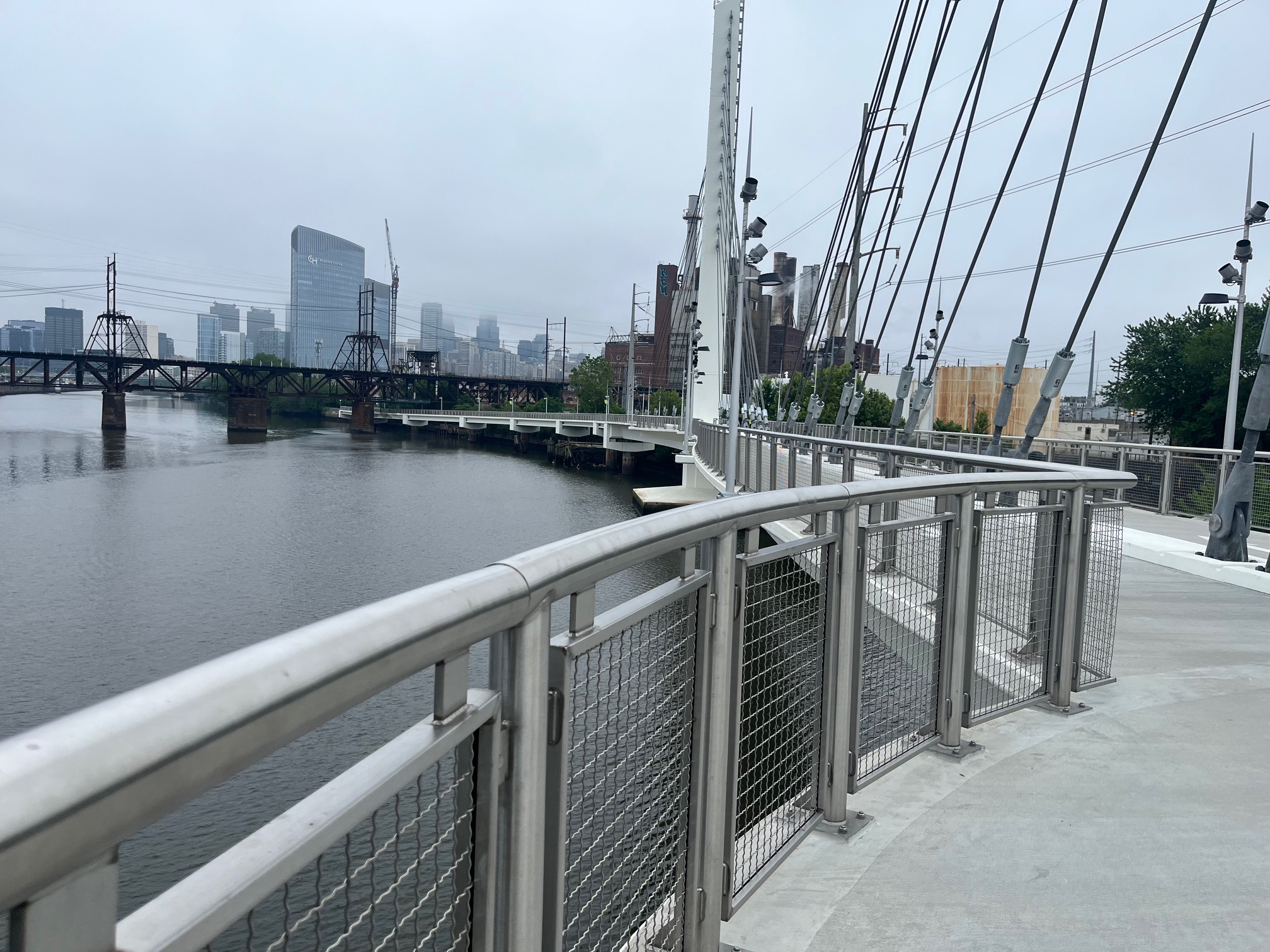
I loved the cables that had me thinking bridge. And sails.
My trio came on a gray Monday with the never-ending threat of rain. Even then, we didn’t have the place to ourselves. I can’t imagine trying to bike here on a weekend.
This was also an opportunity to introduce the Schuylkill River Trail to friends who never ride in Philadelphia. So after heading south from Lloyd Hall to one end of the SRT, we reversed course and headed north along Kelly Drive, past Boathouse Row and Fairmount Park, under a few bridges and eventually to Manayunk and its Main Street.
Climb a hill or risk mud on the Manayunk Canal path? We chose the latter, and oh we found mud. We biked past some of old textile mills, long shuttered and now repurposed, past the Flat Rock Dam and the improvements that soon will send fresh water flowing into the canal.
Back on pavement, it was only a few more miles to Conshohocken, our turnaround point. The trail, though, keeps going … to Norristown, Valley Forge, Phoenixville, Pottstown and eventually Reading. No surprise, then, that it’s one of the anchors for the region’s Circuit Trails network. (Read about my metric century ride to Reading.)
We took the hill option on the way back. The route I’d mapped out called for crossing the river to enjoy a section of the Cynwyd Heritage Trail, but lunch was calling in Manayunk. So we did that instead.
A 30-mile day.
After the bike ride
It would be a shame to come to Philadelphia and not do something else. The Eastern State Penitentiary has long been on my list, and with free museum passes borrowed from my library, why not?
This massive facility, with 30-foot stone walls, was the result of the first prison reform movement in the U.S. Thank people like Benjamin Franklin and the Philadelphia Society for Alleviating the Miseries of Public Prisons, to which he belonged, for this. They thought putting each prisoner in their own cell for 23 hours a day would give them time to reflect, repent, and seek a better life. I think solitary confinement would make you crazy.
Eventually they built a two-story cell block:

They valued anonymity here. At the beginning, your jailers never saw your face.
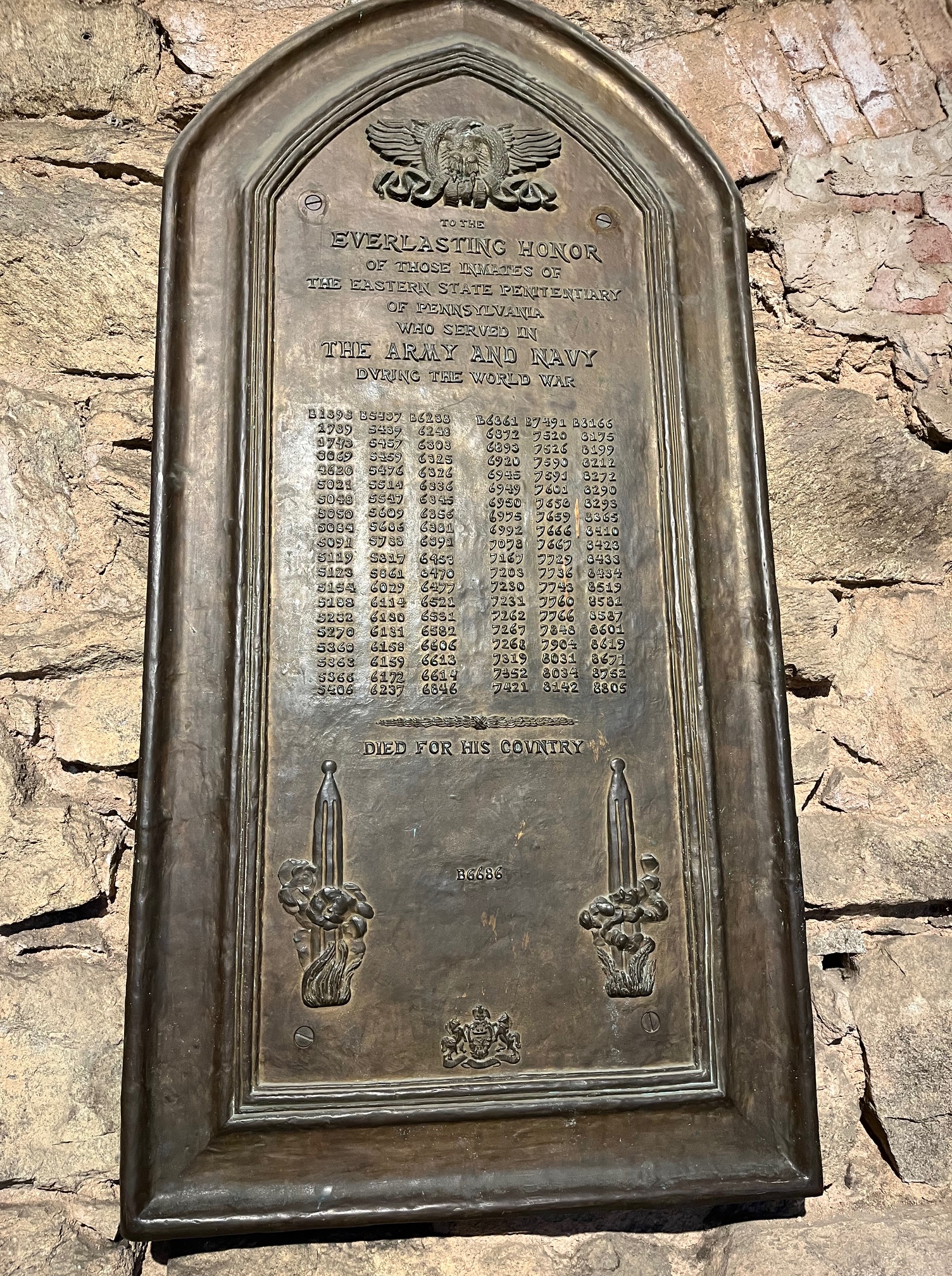
And those who served in World War I? They’re listed by their prisoner numbers, not their names.
I’ll have to go back. One of the things we missed was Al Capone’s cell. Sounds like he didn’t have to rough it like most prisoners.
The museum leaves you with lots to think about with our current system of mass incarceration and long prison terms. Equally, what does it take to get someone to abandon crime? And why are other countries more successful at this than the U.S.?
More Philadelphia-area riding: I’m late to the Perkiomen Trail — but wow!

 Exploring by bicycle
The pris
LikeLike
What a beautiful bridge! So elegant.
LikeLike