Yum! Wednesday night .. I’m one of those who couldn’t resist:

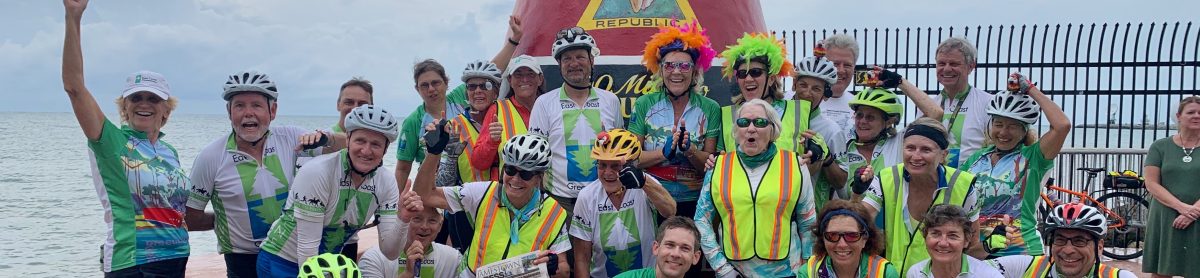
Well-earned dessert.
Yum! Wednesday night .. I’m one of those who couldn’t resist:
Another section of the Tobacco Heritage Trail is under construction.
 We rode another stretch of the Tobacco Heritage Trail on Wednesday, this time on the edge of Boydton, the county seat of Mecklenburg County — and population 431 in the 2010 census. Yes, we are biking through small towns, towns that certainly could use an economic boost that cyclists using the East Coast Greenway could provide.
We saw some trail under construction east of where we picked up this stretch of the Tobacco Heritage Trail, and it will eventually be another part of the East Coast Greenway. It’s always cool to see the East Coast Greenway become more off-road on these rides. But Tobacco Heritage Trail organizers, why wait to get some basic information onto the kiosk?

The stretch of trail we rode Wednesday was just one mile long. Once we rode into Boydton, we essentially doubled back halfway on the road to our lunch spot. Hope the Copper Kettle puts up some yard signs by the trail to attract some riders. After Boydton (we saw one restaurant near the main square), it’s empty back roads (and no food) until Clarksville.
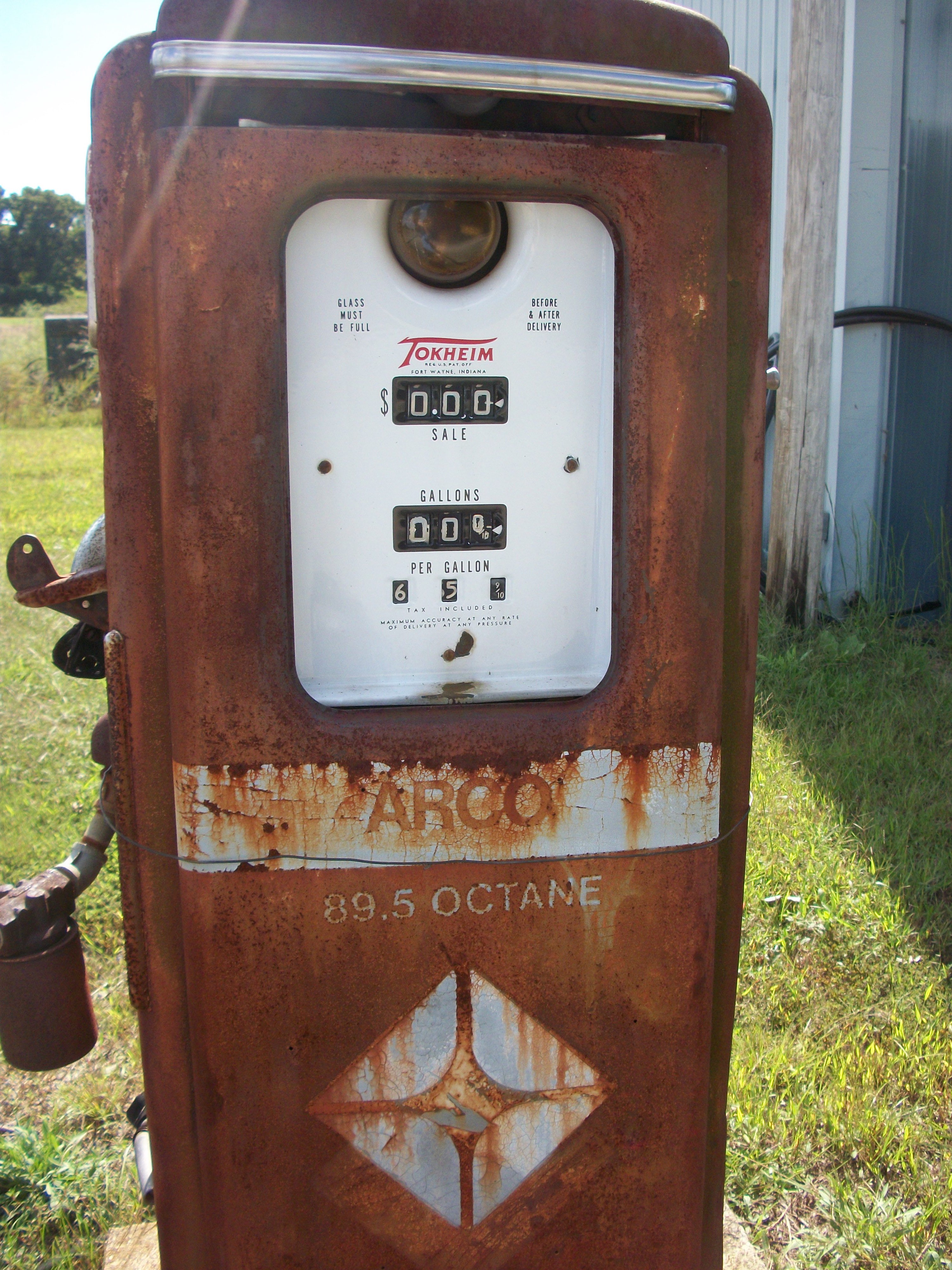
How empty?
This is from when gas sold for 65.9 cents a gallon:
A look at the South Hill’s Tobacco Farm Life Museum of Virginia

With Wednesday just a short day, many of us opted for a late start so we could visit the local museums in South Hill. After all, tourism is part of bike touring.
I passed on the doll museum (a local woman’s large collection) and the train museum (the layout of the local club plus part of another collection — I was told it was impressive) and just went to the tobacco museum for a bit of education.
 Tobacco is still part of the area economy, but with the help of machines, three people can plant an acre in an hour or two, not the full day it took a century ago. Back then, you used a wooden peg to make the hole for the plant (not too different, really, than I sometimes do in my garden), then use this metal contraption that would drop a seedling into the hole and add water.
 Leonard, who runs the museum, gave me a peek into the sheds where they once dried tobacco leaves, a process that took days and a fire that kept the space around 120 degrees. My bet is that today, those men would be barbecue pit masters.
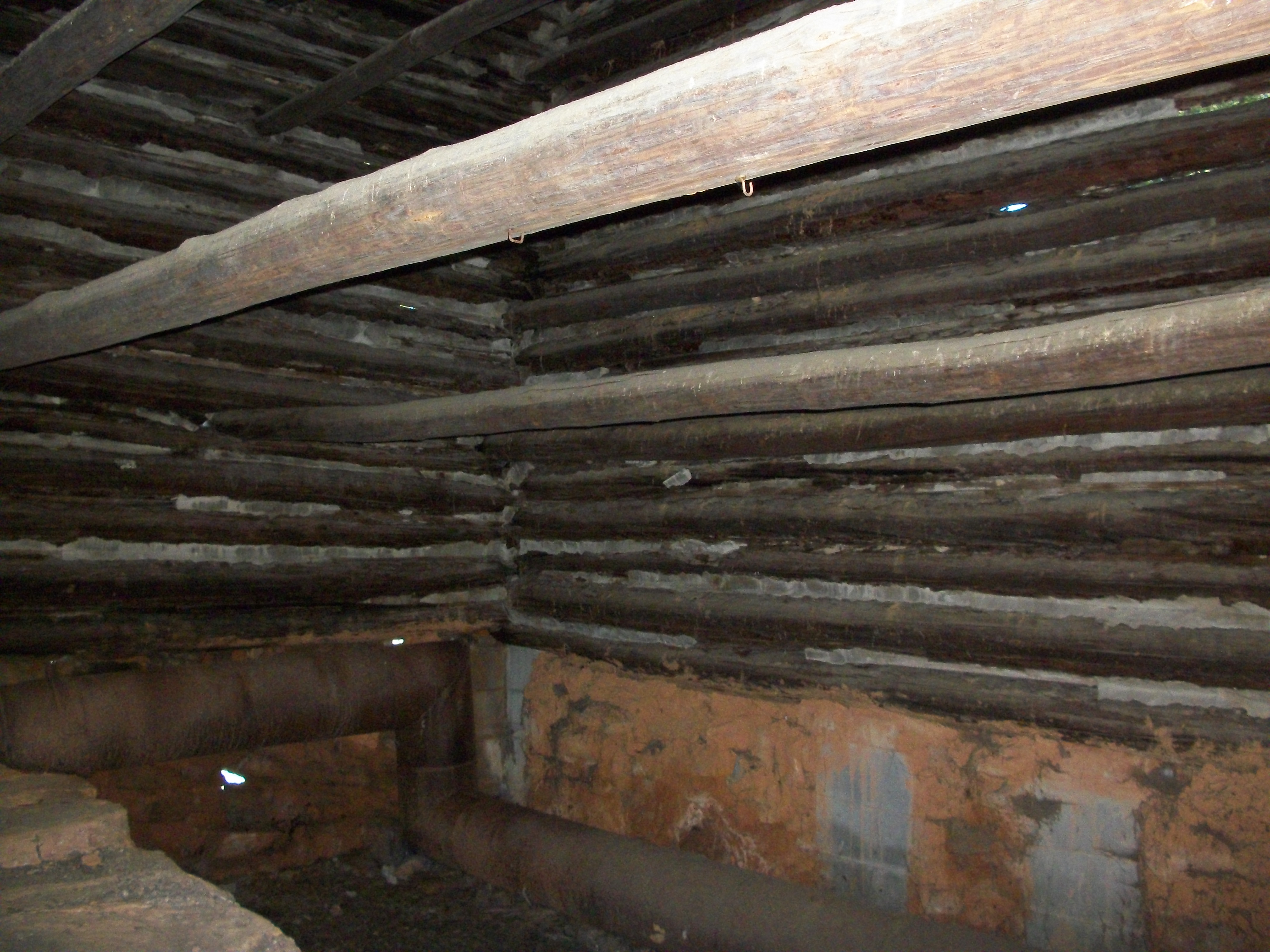 It sounds like a hard life.
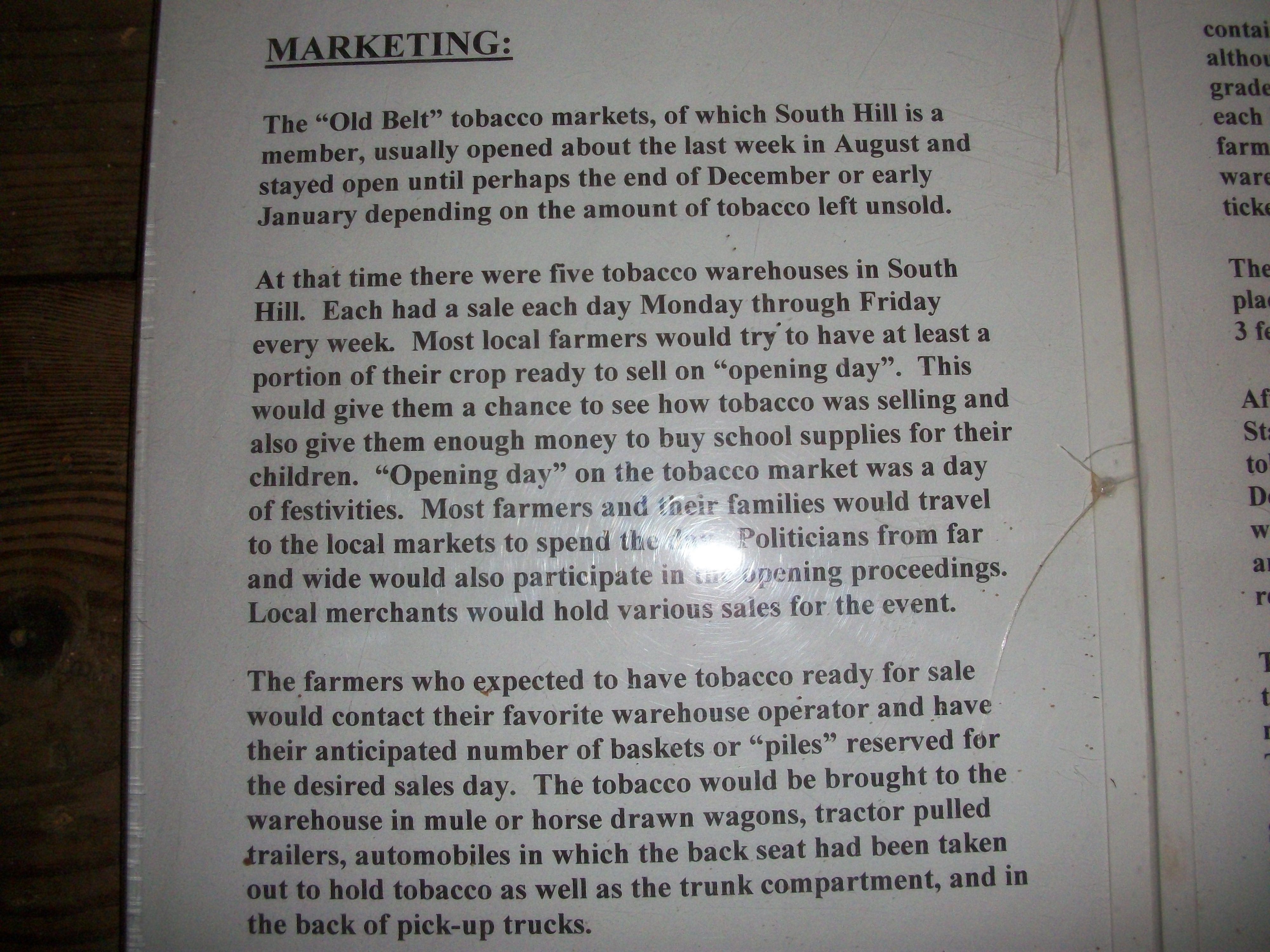
Some more pictures from the museum:


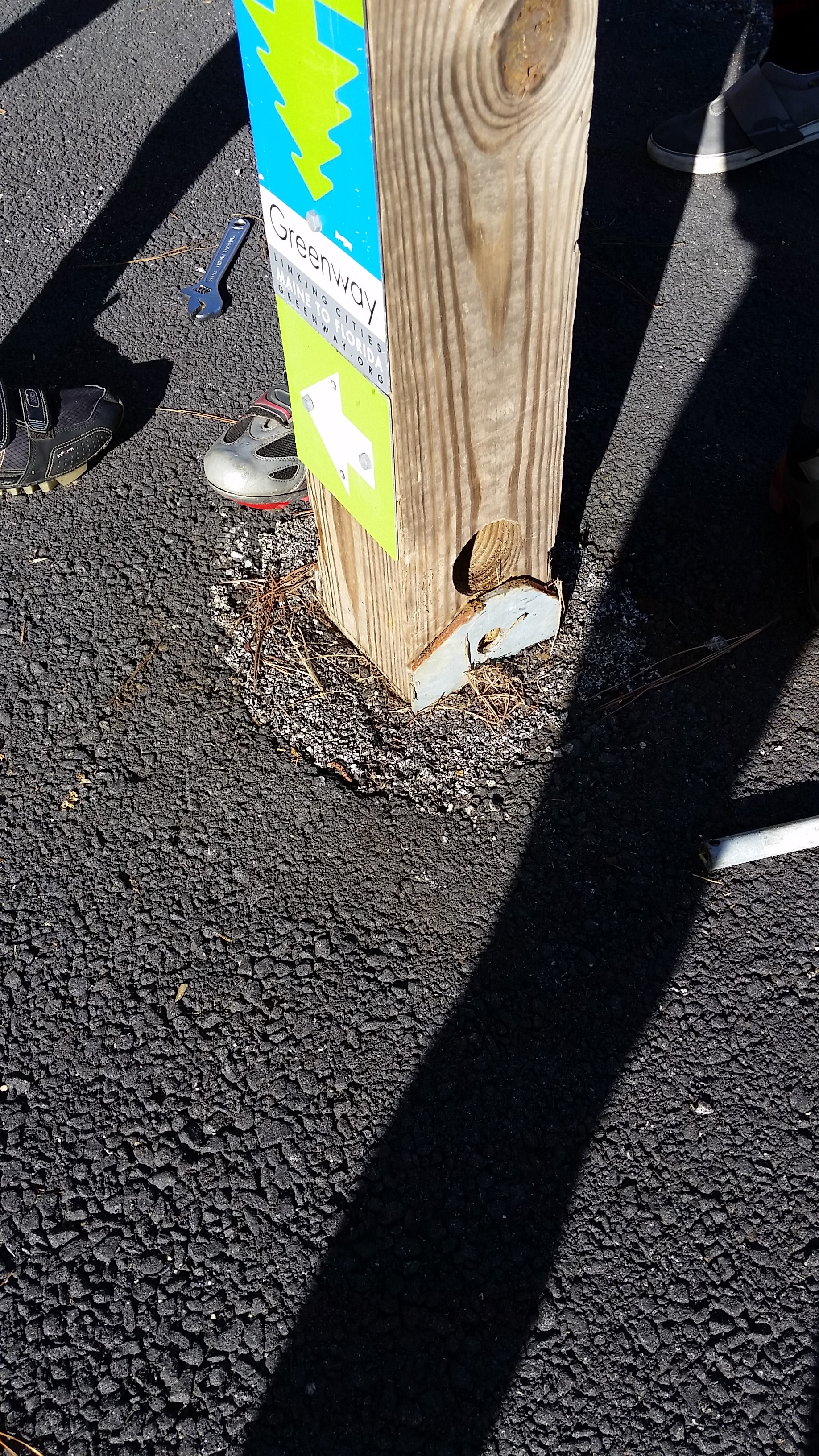
The wooden bollard that keeps motorized vehicles off the Tobacco Heritage Trail in South Hill had been put in backwards at some point. We fixed that.

One of our riders has a sharp eye for the little stuff — in this case, East Coast Greenway arrows that pointed the wrong way. It was at the end of the off-road section of the Tobacco Heritage Trail as we reached South Hill on Tuesday night, and Rob Dexter vowed to fix it on Wednesday morning. I volunteered to come along to document this, and before I knew it we had become quite a little group.
Basically, the wooden bollard that keeps motorized vehicles off the trail had been put in backwards at some point, most likely when it was pulled out another time. The Tobacco Heritage Trail sign on the sloped part was facing the trail instead of the road, so those riding to the trail couldn’t see it. That meant the East Coast Greenway arrows were off too. So it was just a “simple” matter of someone (in this case, he-man Andy Hamilton) lifting the bollard out of its slot, giving it half a turn and putting the metal rod back in place.
40 miles sounds really easy … except there were plenty of hills, and some were long and steep.
Today was our short day, though we made it a bit longer than the 34 envisioned. Still, 40 miles sounded really easy … except there were plenty of hills, and some were long and steep. On the other hand, we rode some back roads that seem to get so little car traffic, they might as well be trails.
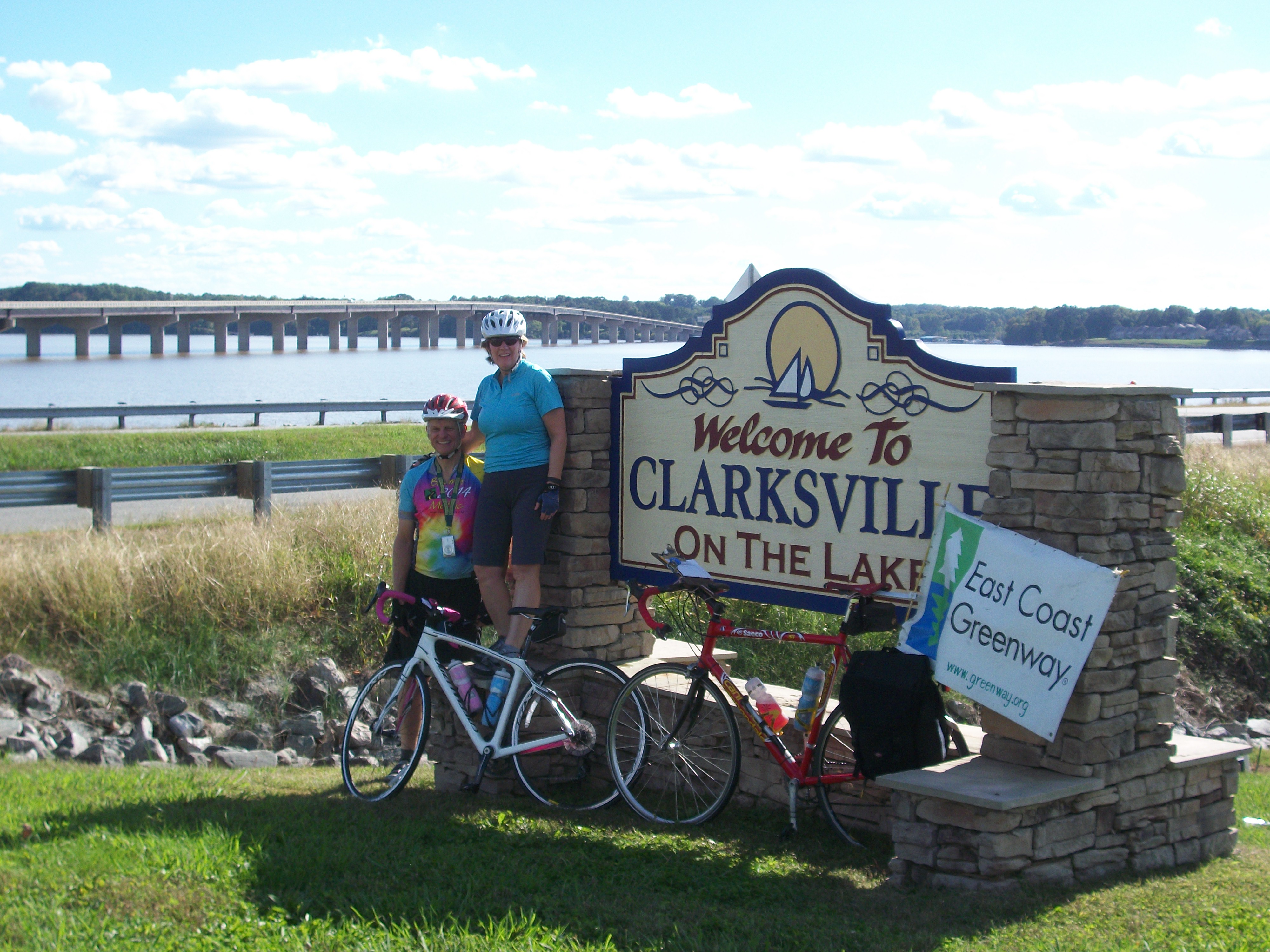
We ended in Clarksville, Virginia’s big lakeside resort town, just north of the North Carolina border.
Here’s some homeowner’s idea of a sculpture garden:

Wonder what prompted the collection of old toilets. This is just a few of them:

And here’s where we finished:
Long group dinner and tomorrow is 60 miles to Durham. Time for sleep. More details later.
Here’s my assessment of the Tobacco Heritage Trail.

Finally got some trail riding today — we were on the Tobacco Heritage Trail from Lawrenceville west to the end, which seems to roughly be the Lacrosse/South Hill line. Yes, it’s part of the East Coast Greenway.
Here’s my assessment:
Much of the trail we rode is crushed stone and at times became very soft and sandy. I definitely felt it in the legs, and our pace was much, much slower. We were all thrilled when it turned to asphalt. (The trail pamphlet shows a long on-road stretch from Lacrosse west to Chase City.)
The trail amenities we saw are impressive. The bathrooms are these stand-alone structures large enough to accommodate someone in a wheelchair (not that a person in a wheel chair is going to be happy pushing through the soft surface, but maybe it was particularly soft because of the recent storm). Solar panel on the chimney, a motion sensor when you walk in the door that turns on the light. Not some smelly portapotty.

And I bet the horses love the soft surface. The trail caters to horse riders with these little steps to make it easy to mount your horse, and these places to tie up your horse. Not that we saw any today. Of course you could use this to mount your bike instead:


Of course there are picnic tables and historical markers along the trail.
There are few access points on the crushed-stone portion of the trail, unlike, say, the Delaware & Lehigh Trail south of Jim Thorpe. That makes it harder to use it for a short distance.
The Tobacco Heritage Trail hasn’t yet hit that tipping-point length when it becomes a tourist destination. The goal is to reach 150 miles of rail-trail, plus connecting corridors, as funding becomes available. It should be a draw well before then, giving the area some badly needed economic stimulus.
And food? We gave this place behind the trail in Lawrenceville a thumbs up:

72 sunny miles in rural Virginia

A long but fabulous day: 72 miles on mostly quiet roads or trails. And sunny. What a contrast to Monday!
We cut Robert E. Lee’s last supply line as we headed south of Petersburg, leaving those chasing Lee and Grant’s ghosts to fade toward Appomattox while we headed southwest to South Hill.
This is rural southern Virginia, where towns have been left behind as the tobacco industry survives on life support and the interstate (I-85 in this case) saps their commercial life. Truly a case where a developed East Coast Greenway could bring some badly needed cash into these communities. We rode some of the time on U.S. 1. Where I live, it’s three scary lanes of traffic in each direction, and you’d be insane to bike on it. Here, traffic is insanely light.
Continue reading “Day 3 – Quiet roads in rural Virginia from Petersburg to South Hill, Va.”
Our ragtag group of Northerners and Southerners moved out of Richmond and onto Petersburg.

This ragtag group of Northerners and Southerners made a slow advance out of Richmond, first doing a reconnaissance to the rear of our lines to inspect the statues for the Heroes of the Confederacy (clearly Robert E. Lee was the hero, and Jefferson Davis’s statue was pretty puny) and the one for hometown star Arthur Ashe, also on Monument Avenue but set apart from all those who fought for slavery.
Continue reading “Day 2 – On to Petersburg from Richmond on the East Coast Greenway”

Hostels have changed a lot — except in one way.

I haven’t stayed in a hostel since my early backpacking-around-Europe days. But that was the preferred option in Richmond, so I signed up.
Hostels have changed a lot. More private rooms, with bathrooms too. Even in the bunks, they provide sheets and towels — no need for a sheet sack. It’s one toilet and shower per bathroom, so not even what I remember from college dorm life.

The Richmond hostel is brand new and is in an old factory that later became a women’s prison. Very hipster, with exposed brick everywhere on the ground floor.
One thing hasn’t changed: You have to help clean up.

 Exploring by bicycle