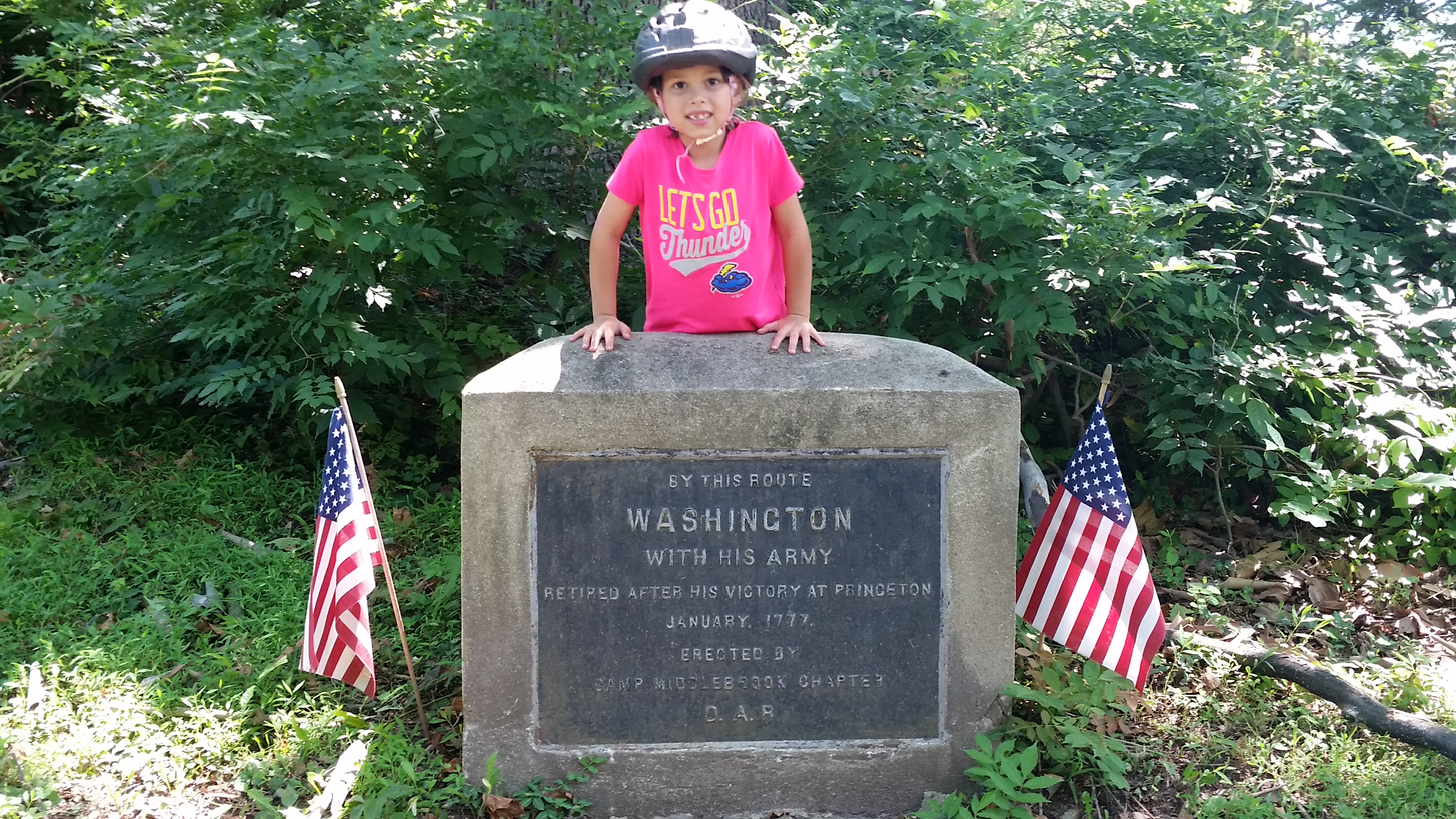
 Time for another history-themed bike ride in New Jersey.
Continue reading “Following the footsteps of George Washington … and his spy”
A historical and family-friendly bike ride from Rocky Hill to Griggstown, home of that “notorious Tory spy” John Honeyman. Or was he really a spy for George Washington.
Time for another history-themed bike ride in New Jersey.
Continue reading “Following the footsteps of George Washington … and his spy”
We ate our way around the world on this 46-mile jaunt through northern New Jersey.
Northern New Jersey may be the last place you think of for a bike ride: densely populated urban areas with way too much traffic (and potholes) to make a cyclist happy.
This East Coast Greenway adventure showed us we had it all wrong. And it highlights just what a melting pot this state is.
Continue reading “A bike ride from Portugal to India without leaving New Jersey”We discover more of the Lawrence-Hopewell Trail on a 20-mile ride that includes a few miles on the East Coast Greenway.
 One of my longer bike rides over the past week was along part of the Lawrence-Hopewell Trail, a non-quite-finished 22-mile loop off the East Coast Greenway just south of Princeton.
We usually take the D&R Canal towpath (part of the East Coast Greenway) for about 5 miles to the turnoff to Brearley House and then ride past the Lawrenceville School and through Mercer Meadows, a big county park — basically going clockwise on the loop. This time we decided to go counterclockwise because we knew there was a section through the Carson Road Woods that we’d never been on.
Before we got to that, though, we found another section that’s been finished — a sidepath along Province Line Road. It’s the red dotted line in the upper right of this map, and its completion means the trail is 88% done. (See the full map here.)
I don’t have any photos, unfortunately, and it really seems like nothing glamorous — basically a wide asphalted sidewalk right at the side of the road, with no little strip of green acting as a divider. But it’s a key connection on a road that’s busy at rush hour and where motorists go fast at any time. One person I know grumbles about the drainage grates running across the sidepath every so often … and I could do without the rocks around them (probably also for drainage — UPDATE: driving by, that looks like it’s been covered). But it’s a big step.
After all that excitement, we rode the trail on the edge of a Bristol Myers-Squibb campus to reach Carson Road Woods. It has five miles of marked trails, including one mile that’s part of the LHT. Our route felt more meadow-y than the heavily wooded Maidenhead Meadows trail, another new section (for us, at least) near the start (the green dots leading to the parking sign on the map).
After Carson Roads Woods we rode through a neighborhood to Rosedale Road, where we’d seen an LHT sign but had no idea where the trail was. Now we know — neighborhood roads, then trail.
Had we continued on the LHT, we’d have gone through the ETS site, using a trail we’ve previously ridden. Instead, we turned toward Princeton and then home.
All in all, a 20-mile day. Essentially flat, but definitely one for the hybrids.
I opted for a flat training ride — and to find a way to a microbrewery 20 miles away.
 Yes, I’m once again doing the East Coast Greenway‘s week-long fundraising ride, that one with the unimaginative name of Week-A-Year. This time it’s 385 miles over six days, from Wilmington, N.C., to Savannah. In October, so not killer heat but still hurricane season, as we learned last year. (Here’s the first pitch to please support it with a tax-deductible donation.)
I admit I wish it was a seven-day ride. The mileage is more than other rides, though we’re promised it will be flat. Hopefully with a nice tailwind. We’ve got 80-mile days going into and out of Charleston, S.C., and it would have been nice to split one of those in two, just to have more time to play tourist. But it is what it is. Sometimes you’re constrained by where you can get hotel rooms for all of us.
Flat or not, 80 miles is a lot. As are 385 miles (see the full itinerary here). So time to get serious about spending more time on the bike.
I didn’t feel like hills today, so I decided to figure out what it would take to get to this new microbrewery I’d read about last year called Screamin’ Hill. Not that I care about beer. But it could be a fun group ride sometime. (Just bring your own food — they have none. Not even pretzels. No permit.)
This place is only open Friday afternoon/evening and Saturday afternoon — the owners have real jobs, we were told when we pedaled by on a Sunday early this year (that ride was from Allentown, not from home, to kill time while the car was getting serviced).
Every craft beer has to have a story, and this is how this one starts:
“Screamin’ Hill Brewery harkens back to a time in America when life was simple, when farmers brewed with what was at hand from the year’s harvest.”
Whatever. I just wanted a ride.
So off I went, following the route we often take to go through the Assunpink Wildlife Management Area for more than half of the way. Then it was new sights. I hit the nine-mile Union Transportation Trail but gave it a miss since it’s not paved and I was on my road bike. I passed the Cream Ridge Winery. And a farm I know from the Trenton Farmers Market. And horses. It’s rural.
Turns out it’s just under 20 miles to the brewery. As good as flat. I tried a different route on the way back. The road to Allentown had more traffic. I’ll stick to the quiet option.
Add on a second, 12-mile ride to get some groceries, and I am feeling virtuous about my 52-mile day.
We hit part of the Eastern Trail in Maine and went off-route for hipster ice cream in Biddeford. (Hipster in the nicest way, of course.)
 You might remember my not-so-patient wait for ice cream during last year’s week-long ride along the East Coast Greenway in Maine. Because of course you should eat ice cream while biking whenever possible.
We were back in Maine this month to visit friends. They said they’d be up for a bike ride …. so off we went on the Eastern Trail, another part of the East Coast Greenway. The section from Kennebunk to Biddeford is hard-packed, not asphalt, and in one spot a bit muddy after some rain. Glad we had the hybrids. It switched to quiet road through Biddeford and into Saco, where we stopped for lunch at a cute cafe with a deck. I, however, was more interested in ice cream. Not on the menu. Fortunately the waitress was a connoisseur and pointed us in the right direction.
So once everyone was fortified with real food (and my “side” of pulled pork had to be the equivalent of a breadless sandwich — somewhere between a quarter pound and half pound), off we headed to Biddeford and and the Sweetcream Dairy.
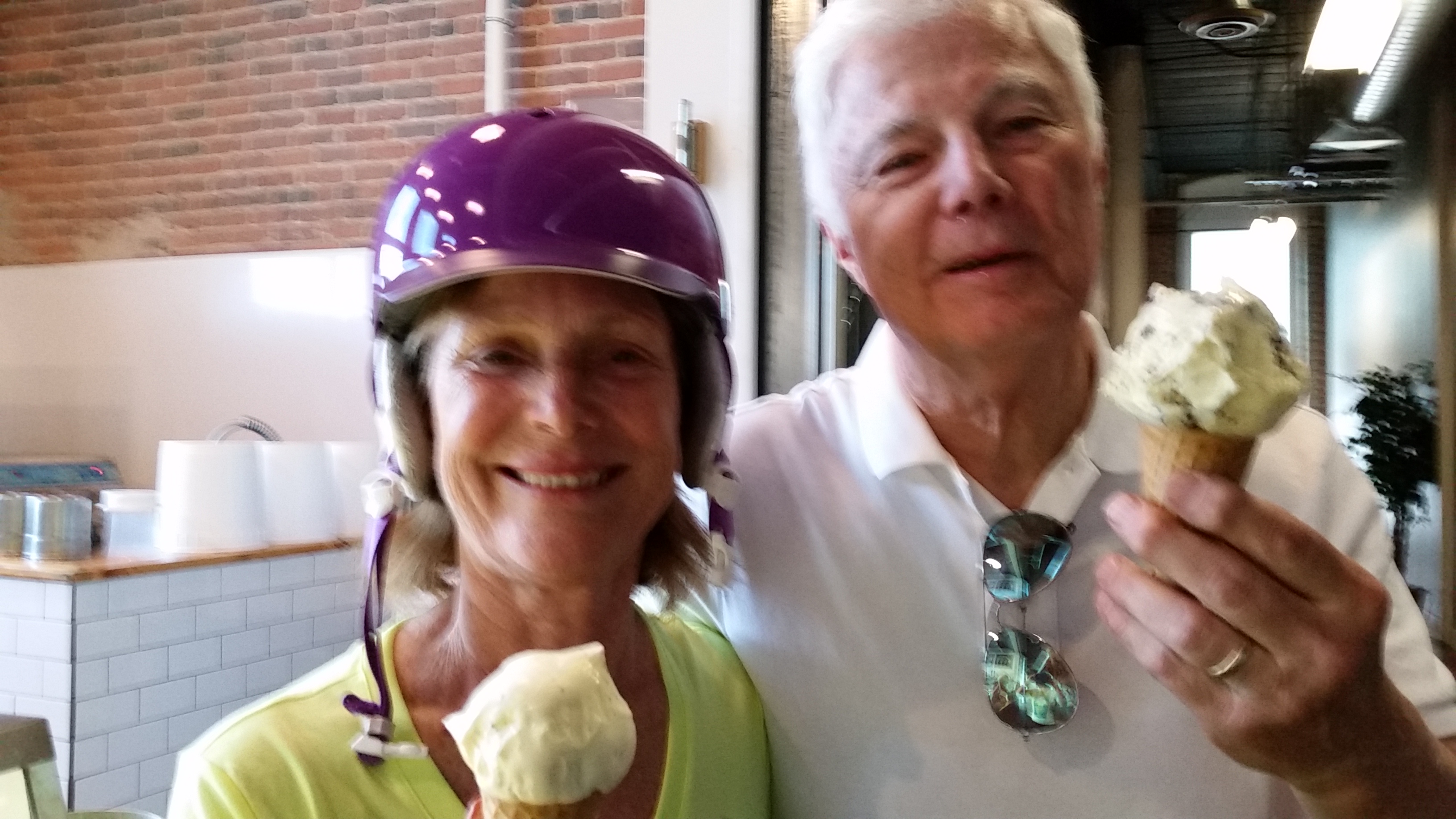
Oh, hipsters. This place is a registered dairy and milk processing plant. Can your favorite place in Brooklyn, Portland or wherever claim that? It batch-pasteurizes its milk. Locally sourced, of course. Provenance on the website. Maine herbs and fruits. I’d say it’s mostly farm-to-table for the ice cream crowd. And located in a repurposed mill — more hipster points.
“Mostly” locally sourced because how do you get local chocolate? Lemon and poppyseed? Key lime? In that true hipster way, it was well-curated — no 31 flavors and all that. Yet I was tempted by so many — rhubarb sorbet, perhaps?
A couple of samples later, I picked the dark chocolate. But there’s a twist: It was vegan. So not me. No idea what the secret non-dairy ingredient was, but it was awesome. I went for the kiddie size and it was so rich, I really could have used one of the citrus flavors to offset that. (Wonder if they’d do a half-and-half in a cup?) A single scoop would have been too much.
Sweetcream, get yourself a sign to and from the Eastern Trail!
All in all, nearly a 20-mile ride. One day I’ll ride the rest of the trail, from Portland down to the New Hampshire border. Stopping for ice cream, of course.
How cool is this? Biking with George Washington.
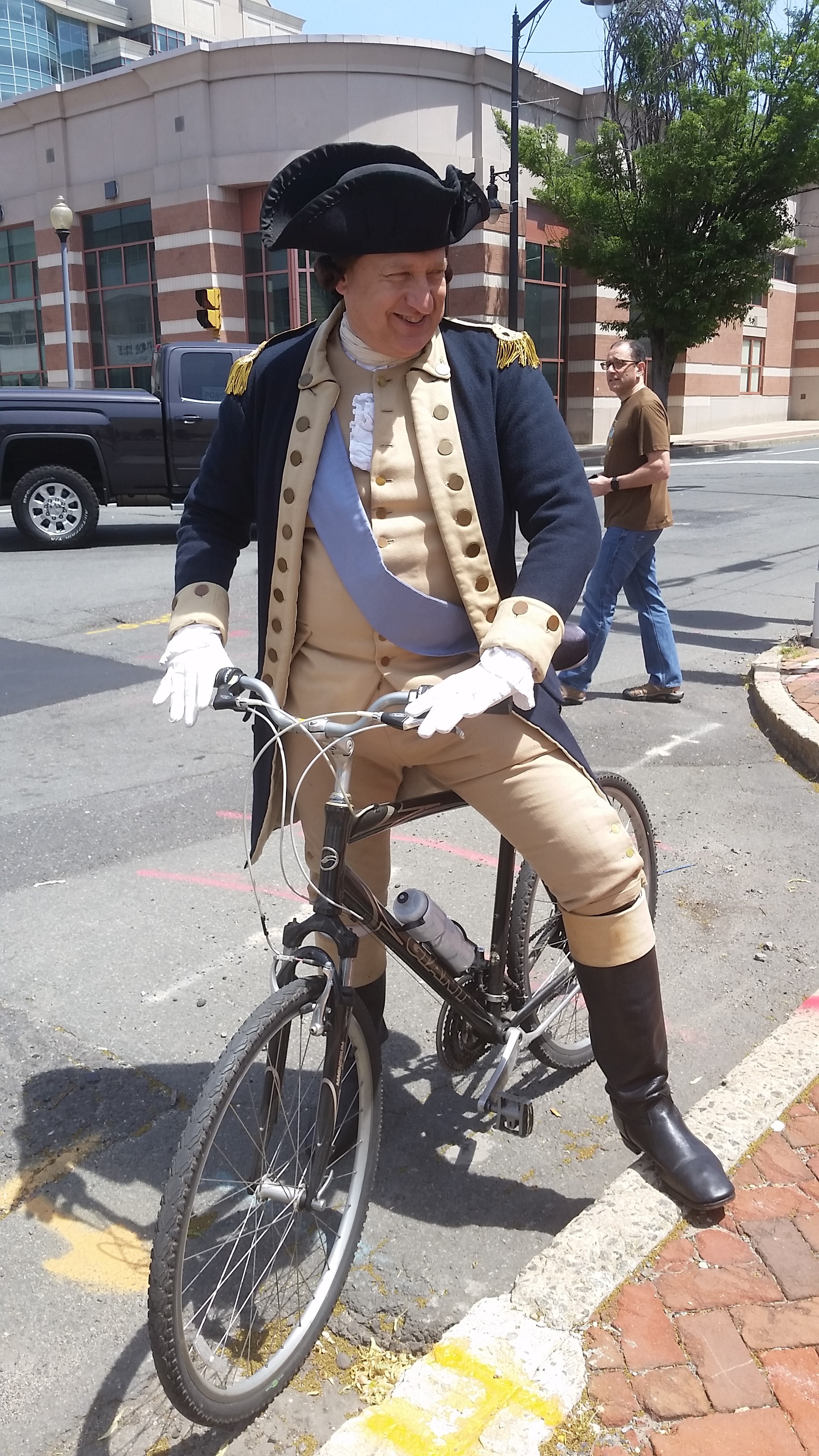 This is the coolest bike ride of the year so far — pedaling with George Washington (OK, a reenactor) and about 80 “troops” from the site of Battle of Trenton to the Battle of Princeton. All that was missing (beyond Alexander Hamilton) were some Redcoats in hot pursuit (even if that last part isn’t historically accurate). Next year!
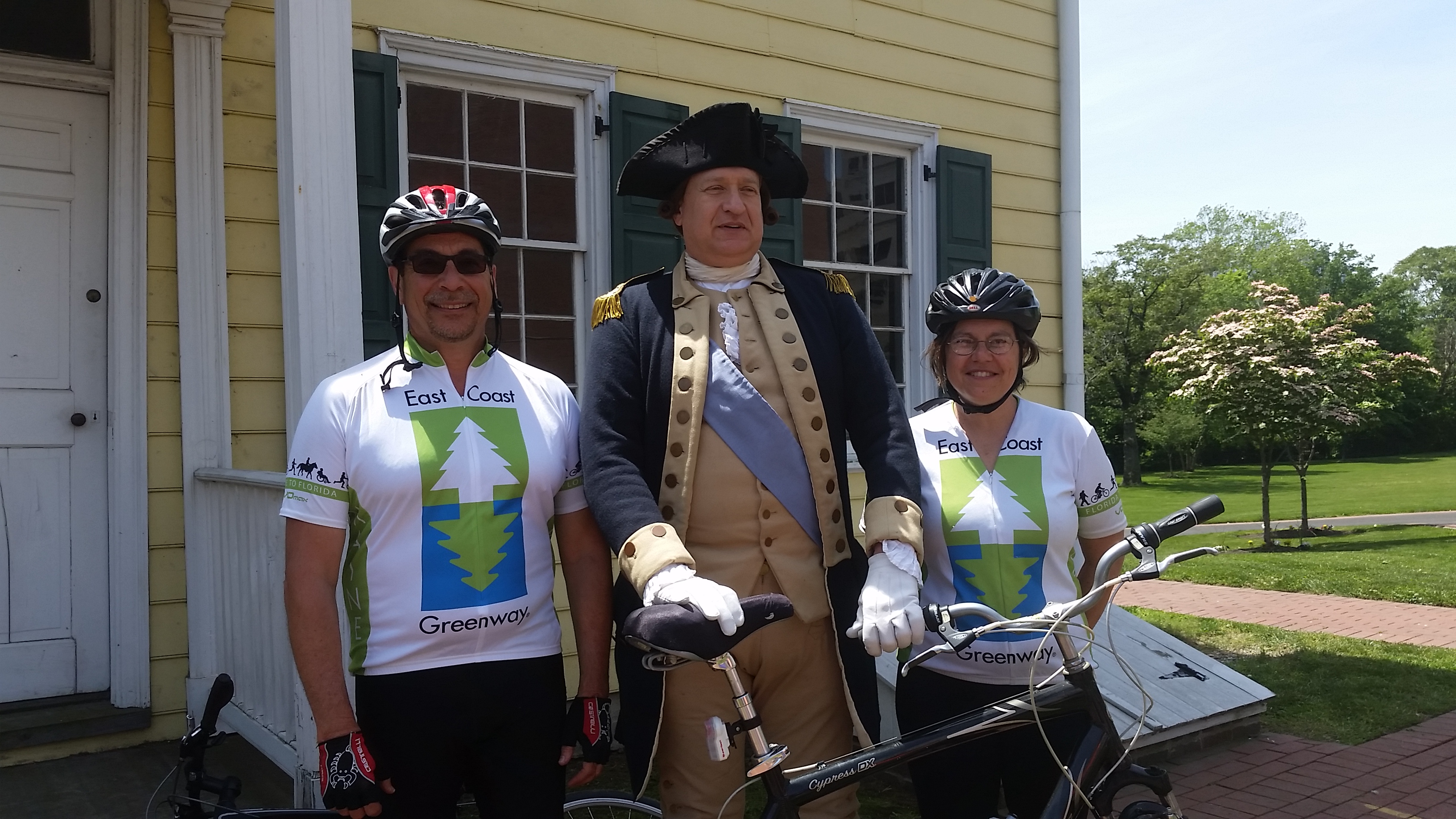 This 10-mile “Chasing George” ride (with accompanying historical talks) was organized by the Historical Society of Princeton with help from a number of organizations, including a few of us representing the East Coast Greenway who escorted one company of “soldiers” from the Trenton train station to the Douglass House, site of a Council of War after the Second Battle of Trenton and the starting point for this ride. Some 37 of us took off behind General Washington, followed by 32 others who took a wider view of history. They had ridden out from just south of Princeton to Washington Crossing (site of the Dec. 25, 1776 crossing of the Delaware River) and then onto Trenton.
Yeah, the kids loved it. They made sure they were up front with George!
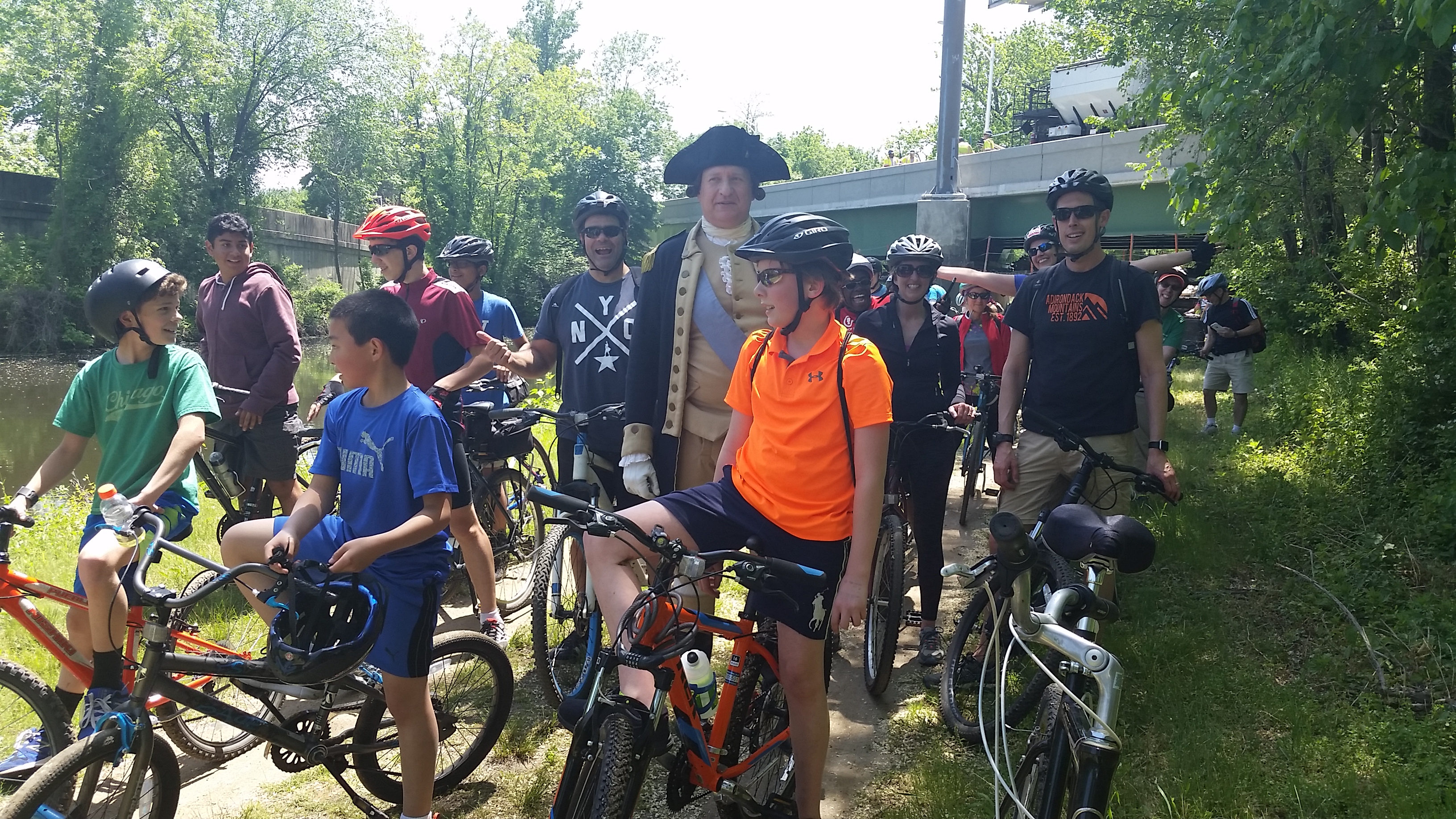 Our route wasn’t historically accurate; we took the D&R Canal towpath (part of the East Coast Greenway), which wasn’t built until the 1830s. The General and his troops had swung wide to give the Brits the slip that night. We ended up near the Princeton Battlefield as part of Princeton’s annual Ciclovia. Too bad it’s held on the edge of town, so attendance is pretty sparse.
But what was so important about these battles? These are the 10 days that saved the American Revolution. And it really was almost at an end. Washington had suffered one loss after another in the New York area and had essentially fled through New Jersey to just across the Delaware in Pennsylvania. Much of the Continental Army had signed up for one year and could go home at the end of the year. And on Christmas night, the army crossed the Delaware, despite the snow and the cold, and surprised the Hessians in Trenton on the morning of the 26th. They won, shocking the British. (And no, the Hessians weren’t drunk). Soldiers stayed on. There was a second Battle of Trenton on Jan. 2 and Washington’s forces held on as night fell. The British planned to finish them off in the morning, but Washington and his troops slipped out of town on a back road heading for Princeton and places north. British soldiers heading south to Trenton spotted them as dawn broke, and there you have the Battle of Princeton. Another win for Washington, and the Revolution was saved.
Want more? Read “1776” if you haven’t already. And catch the re-enactment of the crossing every Christmas Day, take part in Patriots Week in Trenton the week after Christmas and then watch for the Historical Society of Princeton’s own Battle of Princeton events just after that.
Fried? Seafood? Both? Here’s some of what I ate in Mississippi.
Getting out on your bike is just another excuse to try new foods — like that chicken on a stick I wrote about a few days ago.
In Mississippi, my food themes definitely involved fried or seafood, sometimes in the same dish. Somehow there were no signs for ice cream or homemade pie to tempt me along the Tanglefoot and Longleaf trails — and it’s so much easier to resist those at the end of dinner rather than in the middle of the afternoon.
I did discover comeback sauce — said to be called that because you keep coming back for more. It’s essentially a spicy mayo with a reddish tint because of ketchup and hot sauce and seems to be everywhere. There are no shortage of recipe variations, like this one, or this one with fewer ingredients.
Here’s more of what I ate:
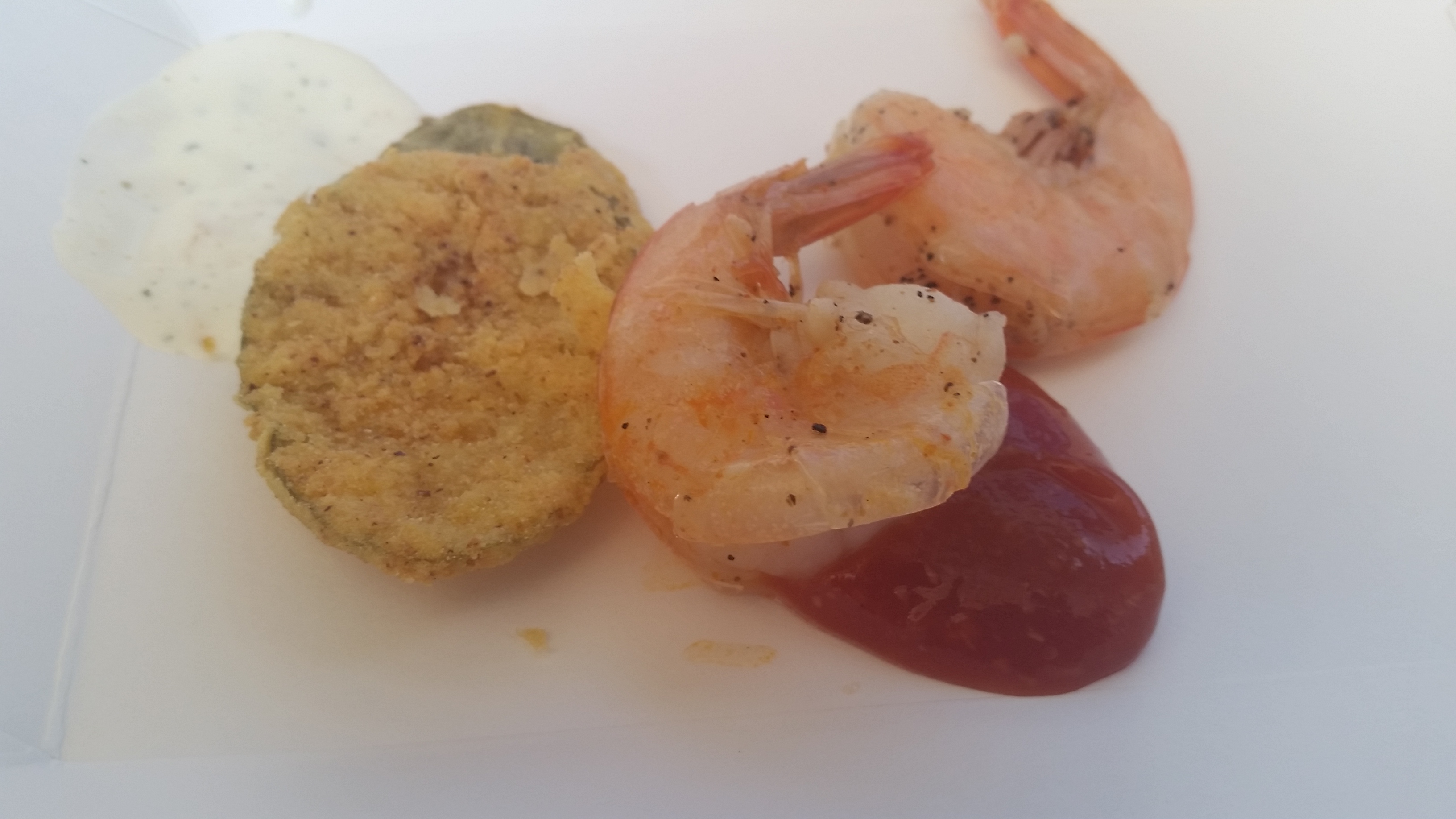
Fried pickles and boiled shrimp in Ridgeland
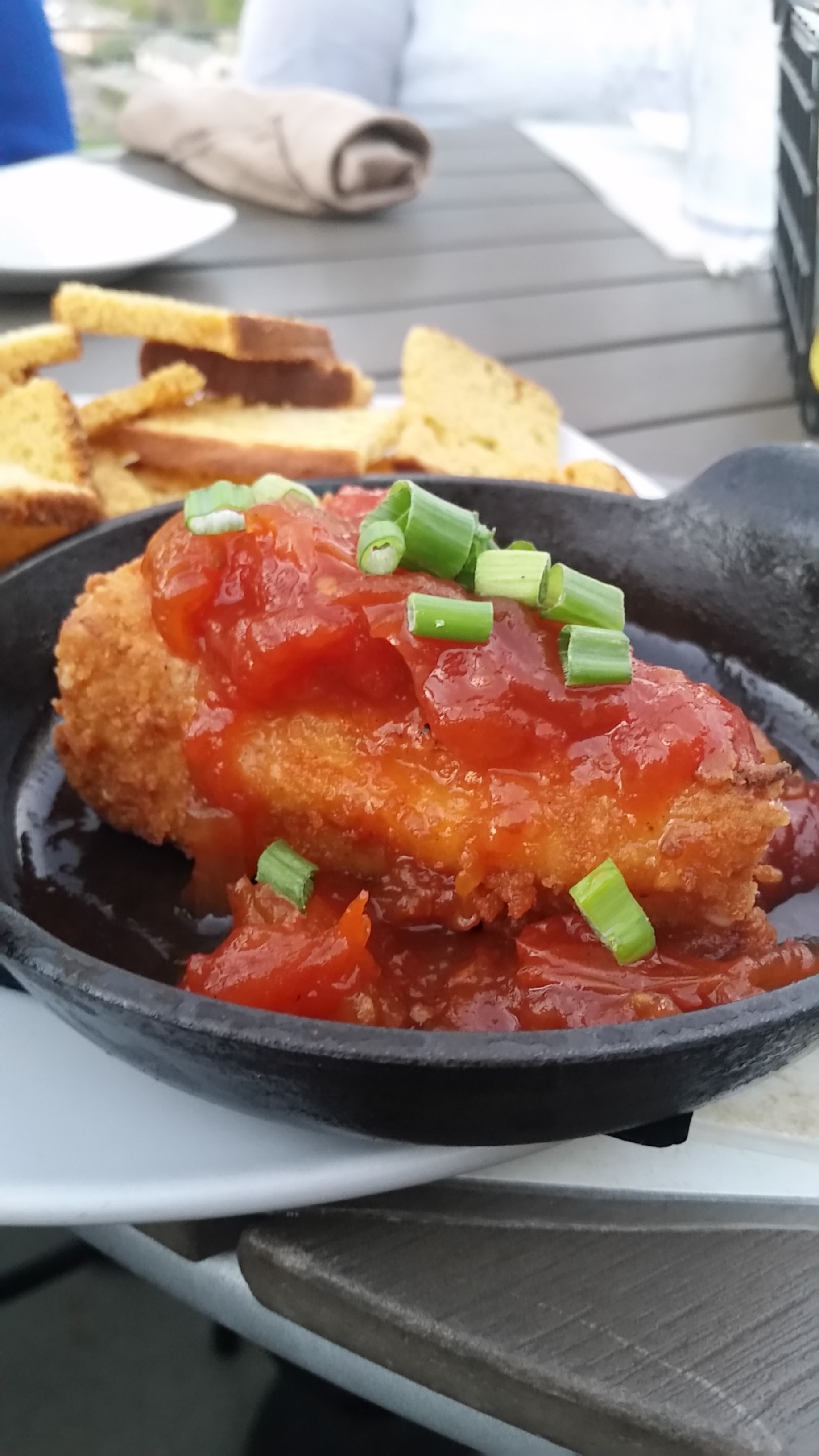
Fried (not baked) brie with delicious tomato jam in Vicksburg
Fried crawfish balls with comeback sauce in Vicksburg

Chargrilled oysters and other seafoods in Hattiesburg
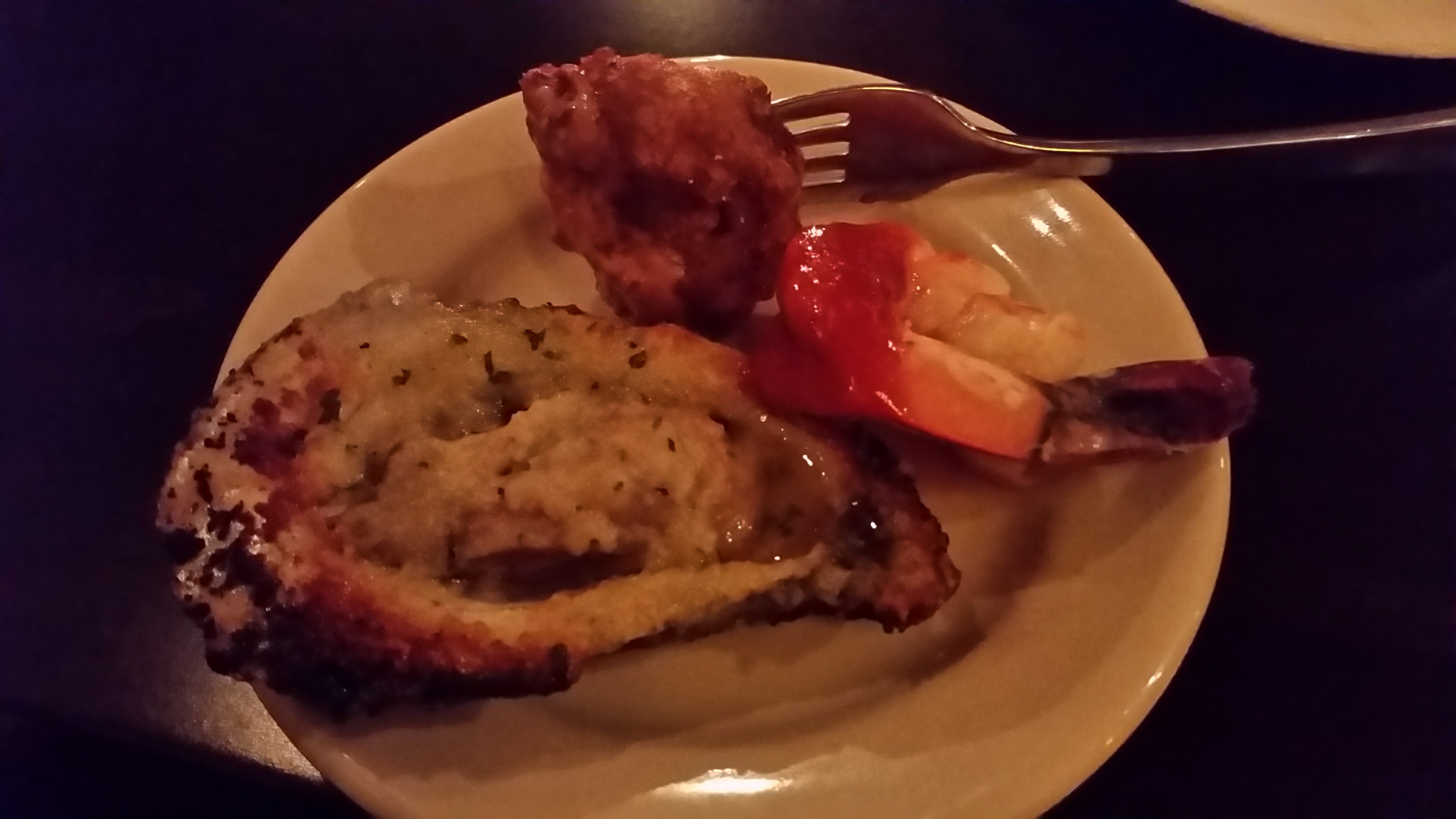
Stuffed shrimp with a corn-tasso-and-more side in Hattiesburg

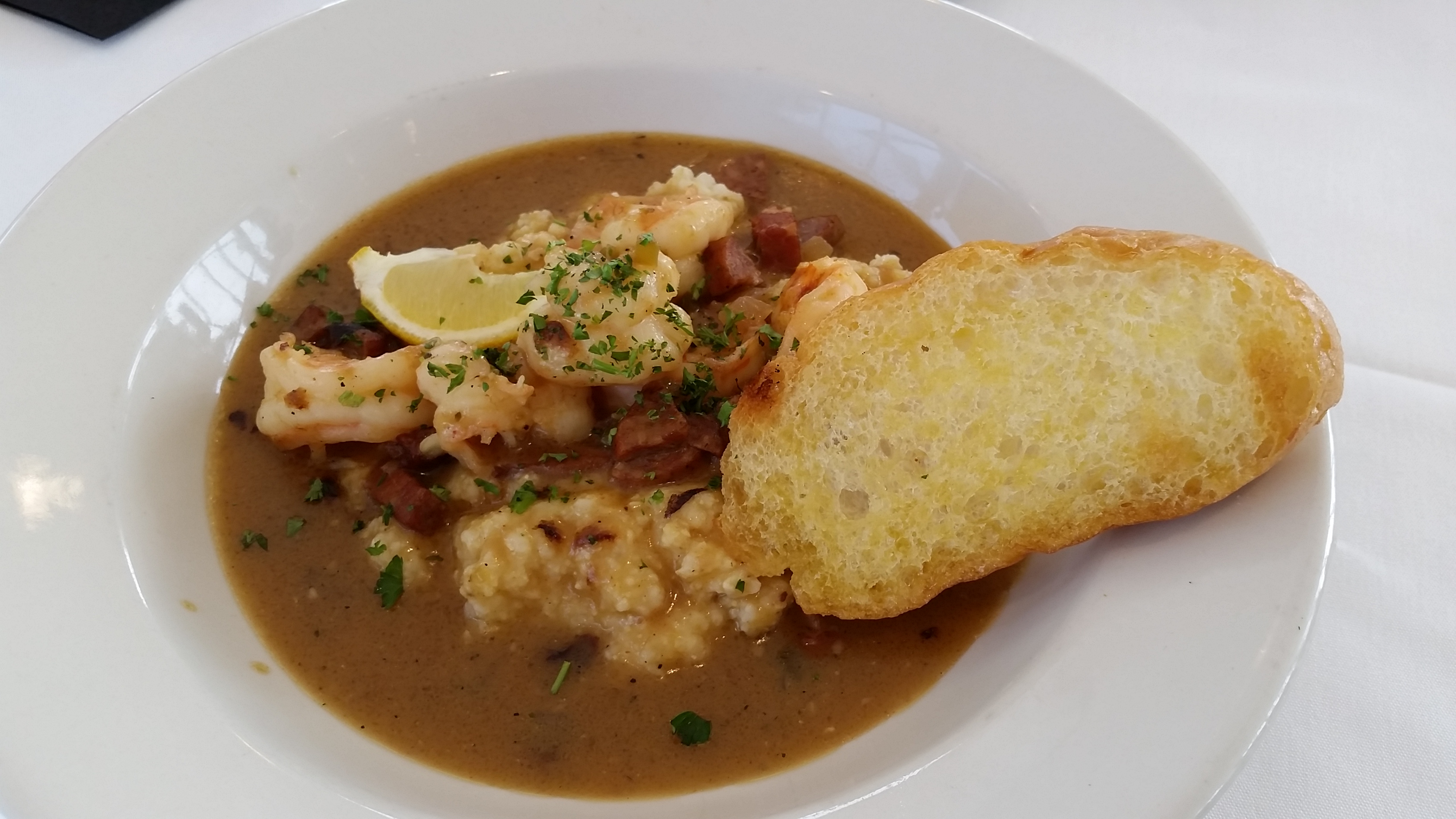
Mississippi-style shrimp and grits in Long Beach:
Beignets in Biloxi:

And what I didn’t eat? Waffle House. We counted seven in one day, I’d say mostly over 15 miles along the beach.
Pascagoula, Mississippi is where Jimmy Buffett was born — and worth a bike ride.
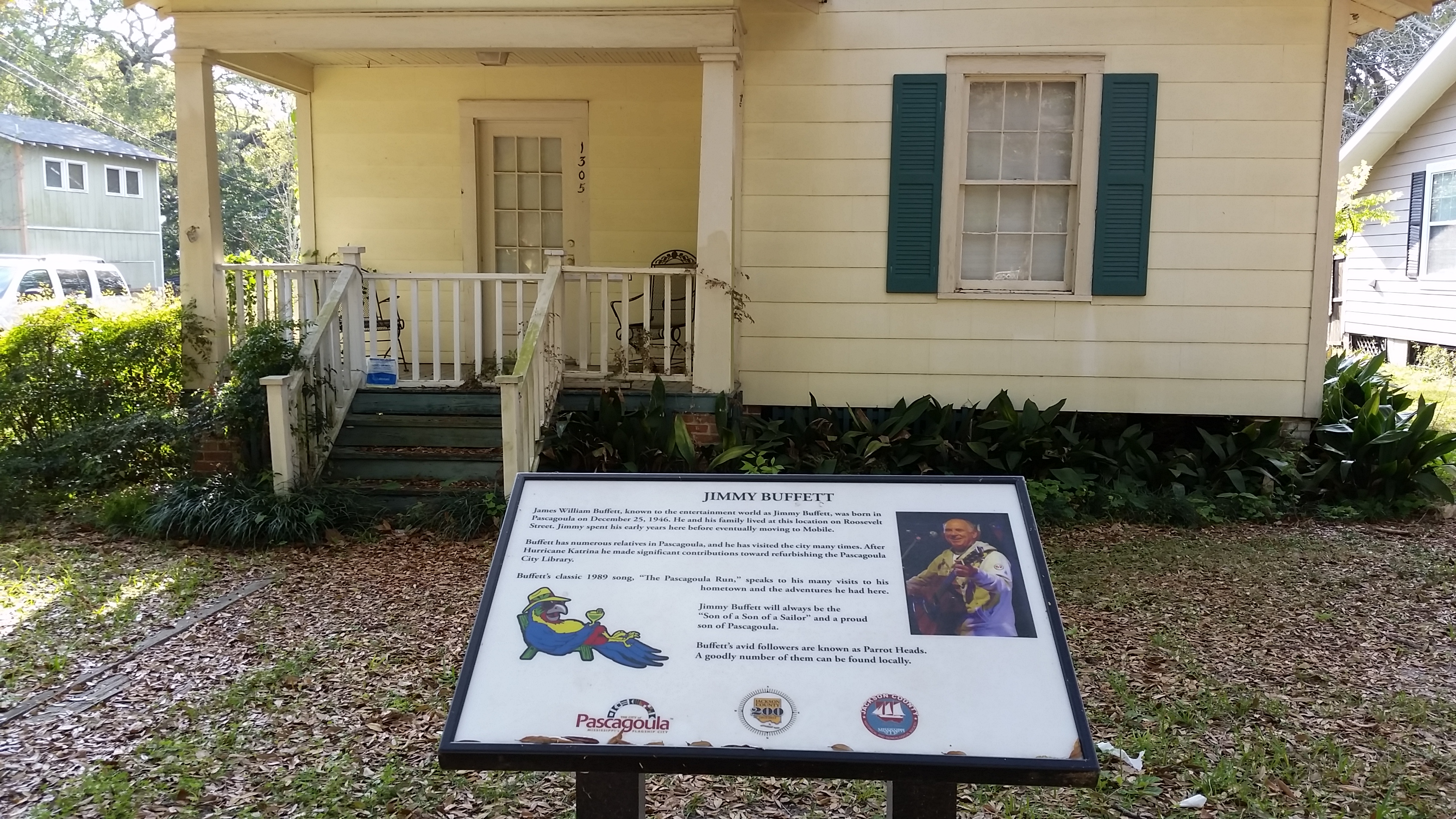 Pascagoula, Mississippi, where we ended our hopscotching across Mississippi, is a town of about 22,000 people with some beautiful homes and a pleasant signposted bike route using quiet roads that takes you all around town.
You hear plenty of Katrina stories when you venture to Mississippi’s Gulf Coast. Will the new construction withstand the next big one?
 It’s impossible to be on the Mississippi Gulf Coast without talking about Katrina. Locals talk about before “the storm” and after. They all have stories — about a teacher who sought refuge in a school and the water line reached 5 1/2 feet and fish were swimming in the classroom, about the military memorabilia that ended up in another person’s yard and the owner couldn’t be tracked down, about homes needing to be gutted. The immediate impact of the widespread evacuations and decisions to start over elsewhere meant that in one school of 620 students, only 120 were back when it re-opened.
Today, nearly 12 years later, the number of households and jobs along the Mississippi Gulf Coast exceed those of before Katrina.
They’re still rebuilding in some spots. You see the occasional empty lot where a home once stood, and most buildings on the beach are no longer allowed. But while I saw plenty of homes and other buildings close to the water on stilts, I was surprised by how many are not.
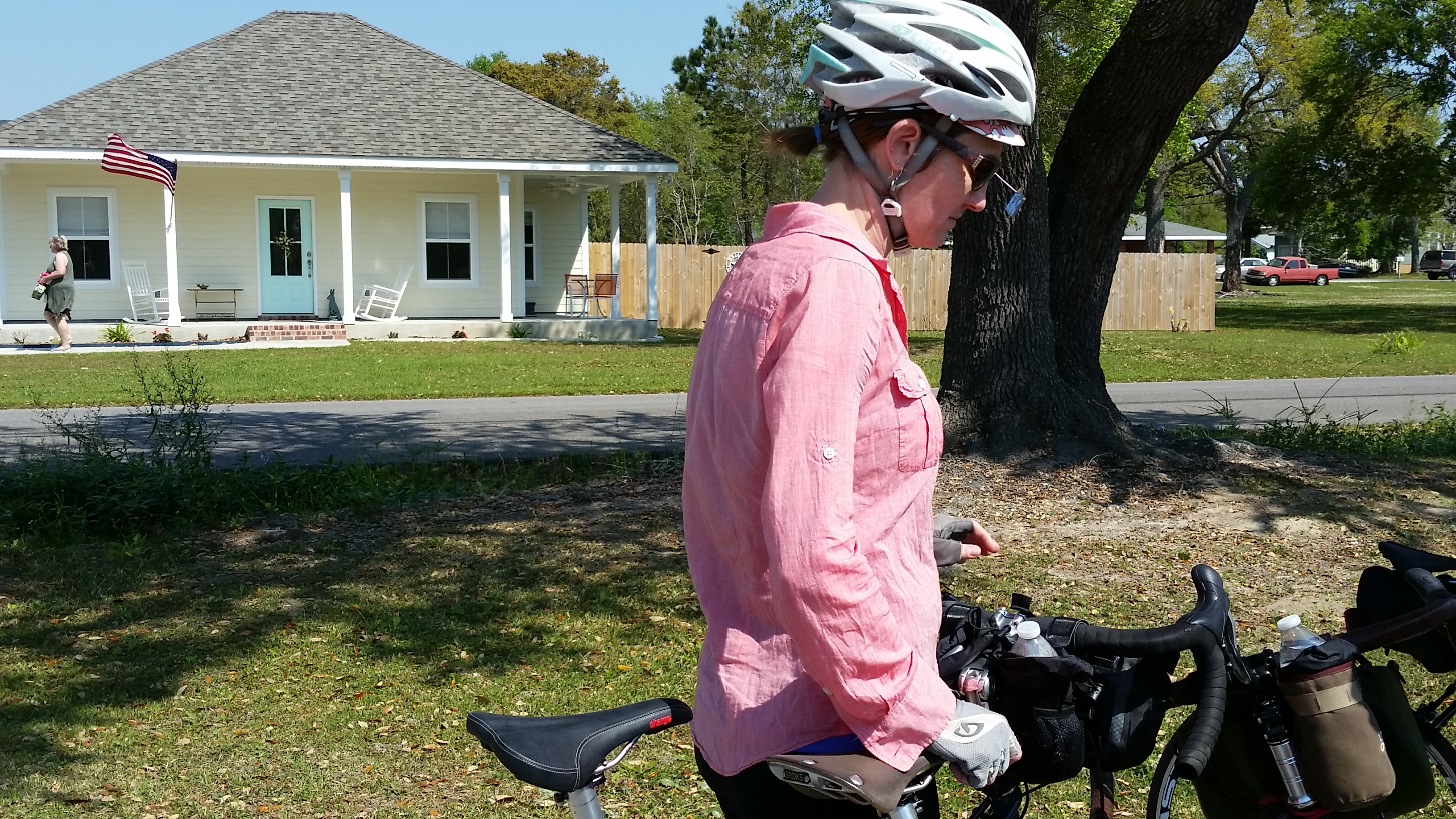
I heard that it was to do with where FEMA sets the flood zone, that if you don’t need mortgage insurance you can do as you please, even that insurance rates are coming down because new homes are being built better — hurricane-proof windows, reinforced frames and such. That may keep the wind from blowing off the roof or picking up the home and throwing it down somewhere else, but let me know how works out when the next big one comes and there’s widespread flooding.
 On the other hand, this 500-year-old oak, the “Friendship Oak” at the University of Southern Mississippi’s Gulf Coast campus with its 155-foot canopy, survived Katrina but lost a piece in a more recent storm.
Loved the sand. I persisted in fighting the headwind.
 Thursday was spent along the Mississippi Gulf Coast. The beaches were gorgeous — and empty. Maybe when there’s this much sun and sand, it’s just no big deal. And it was a workday. Still, wherever rowdy spring breakers go, it wasn’t here.
But the wind! We were biking west to east. That would have been great on Wednesday, when we would have flown along thanks to a tailwind. But we got a headwind. The locals say there is always wind (and that it can change direction during the day). Now maybe they were trying to make us feel good, but even they said it was stronger than normal. Fortunately we rode a few blocks inland for much of the morning, from Waveland to Long Beach. I think the wind picked up after lunch, when we took the beach path from Long Beach to the Biloxi lighthouse. I persisted. But it was slow going! And it killed my legs.
Arlen died too. Shark got him:

So what’s the beach path like? Think concrete sidewalk, not planks like parts of the Jersey Shore. Sometimes the path is wide, but other times it’s no wider than a sidewalk. A recipe for constant conflict with people coming on and off the beach (or even the benches on the far side of the wide version), I thought. But a local claimed no, that it’s pretty empty.
Why the wildly inconsistent widths, even in the same town? It seems to be tied to how they chose to spend post-Katrina money.
Take the road instead? There was a section with what’s essentially an access road, and that was fine. But otherwise you’re talking two lanes in each direction and 50 mph. No thanks.
So the beach path might work when you have a tailwind, assuming it’s not so crowded that you can’t bike. Better would be to complement it with a signposted on-road option using quiet, family-friendly roads a bit inland (and maybe past some other businesses?) for when you’re going in the “wrong” direction.

