Best way to see Vicksburg battlefield is by bike

If you are biking the Natchez Trace and can add some time for a visit to Vicksburg, do it.

vicksburg1This morning was just a fabulous ride — all through Vicksburg National Military Park, led by a cyclist with great stories about the park and some of the soldiers. I am now convinced that the best way to experience a national park is by bike. And if you’re biking the Natchez Trace and have the opportunity to tack on some time for Vicksburg, do it.

Let me start by saying I didn’t realize the Vicksburg campaign was so complex. Yes I knew that it was the last piece in giving Union forces control of the Mississippi River. But I thought General Grant had just laid siege and waited out the Confederates. I had no idea that he tried several assaults that all failed as had an attempt to divert the Mississippi with a canal, that his military career was in danger and that he had tried a daring strategy that included running his supply-laden gunboats down the river in the middle of the night and close to the shore where that the Confederate cannon couldn’t point down enough to hit them.

And no one believed Grant could do it. Even William Tecumseh Sherman didn’t. He called Vicksburg “as strong as Gibralter.”

Vicksburg is on a bluff and the river used to run right below it (the Mississippi moved itself in 1876 and no longer does). So there were hills — great descents with curves, only to have to go right back up. But once again, they weren’t anything like the hills back home.

This is the most monumented park in the country (and probably the world) — there’s an estimated 1,500-1,600 monuments, from simple granite markers to elaborate monuments. There are even some in town, in parking lots and such.

vicksburg2a.jpgThis one from Illinois has 47 steps to mark the 47 days of the siege, has an open cupola and cost $109,000 back in 1906, or what would be $4.6 million today, and represented 25% of the state’s budget.

vicksburg3The Wisconsin one is simpler, but note the bald eagle at the top. This was the mascot of some of the troops and “Old Abe,” as he was called, was a live bird carried in a box and that the Confederates wanted captured. It survived the war.

vicksburg4Here’s another great monument — to African-American soldiers. The one on the right is looking back fearfully at the past. The one in the middle represents the present and the suffering of war. And the one on the left is looking hopefully into the future.

vicksburg5And there are the trenches and tunnels the Union soldiers dug as they moved closer and closer to Confederate lines and needed to stay hidden from Confederate marksmen. There’s also an ironclad that sunk in the river and has been brought up. Much of the iron is gone and the wood is rotting (where it hasn’t been replaced).

Our time in the park was short because we had to head for the Longleaf Trace trail some 90 minutes away by car. (I’ll report on that soon.) But thank you Michelle from Crooked Letter Cycling for a great tour!


At Windsor Ruins, I’m seeing a grander version of Tara

This magnificent antebellum mansion survived the Civil War — and burned because of a stray cigarette.

windsor ruinsOur afternoon ride was shortened at the last minute — just 10 hilly miles from Port Gibson (no longer a port city because the river shifted) to Windsor Ruins, once a grand antebellum mansion with 23 rooms in rural western Mississippi and about 40 miles south of Vicksburg.

It survived the Civil War (occupied by Union troops instead) only to be burned down by a stray cigarette (either during a party or by a workman, depending on what story you believe. Or a mix? Wikipedia says a guest dropped a cigarette onto construction materials.) Now it’s one of the most photographed spots in Mississippi.

To help give the photo some scale, the base of the columns are taller than me. They were for the above-ground basement. Imagine such a thing! Not surprisingly, this was on a huge plantation, so just guess at the number of slaves. I’m thinking it easily outdid Tara.

A Yankee soldier was shot in the front doorway? Now that sounds like something Scarlett did.

Fun fact: We biked on Rodney Road (also where the house is) — going in the opposite direction of General Grant on his way to Vicksburg.

The other way to spell Mississippi

Silly me, I thought it was just M-i-s-s-i-s-s-i-p-p-i.

crooked letterIt’s not just M-i-s-s-i-s-s-i-p-p-i.

Try M-i-crooked letter-crooked letter-i-crooked letter-crooked letter-i-humpback-humpback-i.

And if you want to take it to another level, the letter i becomes “straight letter”.

Honestly, I’ll stick to the regular alphabet.

But did you ever hear the joke “what has four eyes and goes south”? (If I wrote it as four i’s, it would give it away). It’s the Mississippi (and don’t get all smart on me and say it’s five i’s with River).

A Mississippi bike ride on the Natchez Trace and round the rez — but no alligators in sight

I got a taste of the Natchez Trace Parkway on this route that’s a favorite with the locals.

natchez traceWe started the day with a beautiful 35-mile ride around the Ross Bartnett Reservoir in Ridgeland, a suburb of Jackson (the state capital). Blue skies, lots of sun and water on one side all the time means it’s a ride that’s pretty hard to mess up.

We began on a bike trail along the Natchez Trace, a route I’ve always wanted to ride. The whole thing is 444 miles from Natchez to Nashville, so this ride was just a tiny bit of it. (Add the full route to the bucket list — starting from Natchez since you’re more likely to have a tail wind.. and you build up to the foothills of the Appalachians.) Continue reading “A Mississippi bike ride on the Natchez Trace and round the rez — but no alligators in sight”

43 miles on Mississippi’s Tanglefoot Trail

The Tanglefoot Trail runs from New Albany to Houston.

bikes and butterfliesThis is a rail-trail that stands out for doing the most basic of amenities incredibly well — shelters with running water and real toilets (and even outlets to recharge your phone).

Continue reading “43 miles on Mississippi’s Tanglefoot Trail”

Hopscotching across the state of Mississippi

breakfast concord inn(It’s always about the food isn’t it? Much nicer than my usual style!)
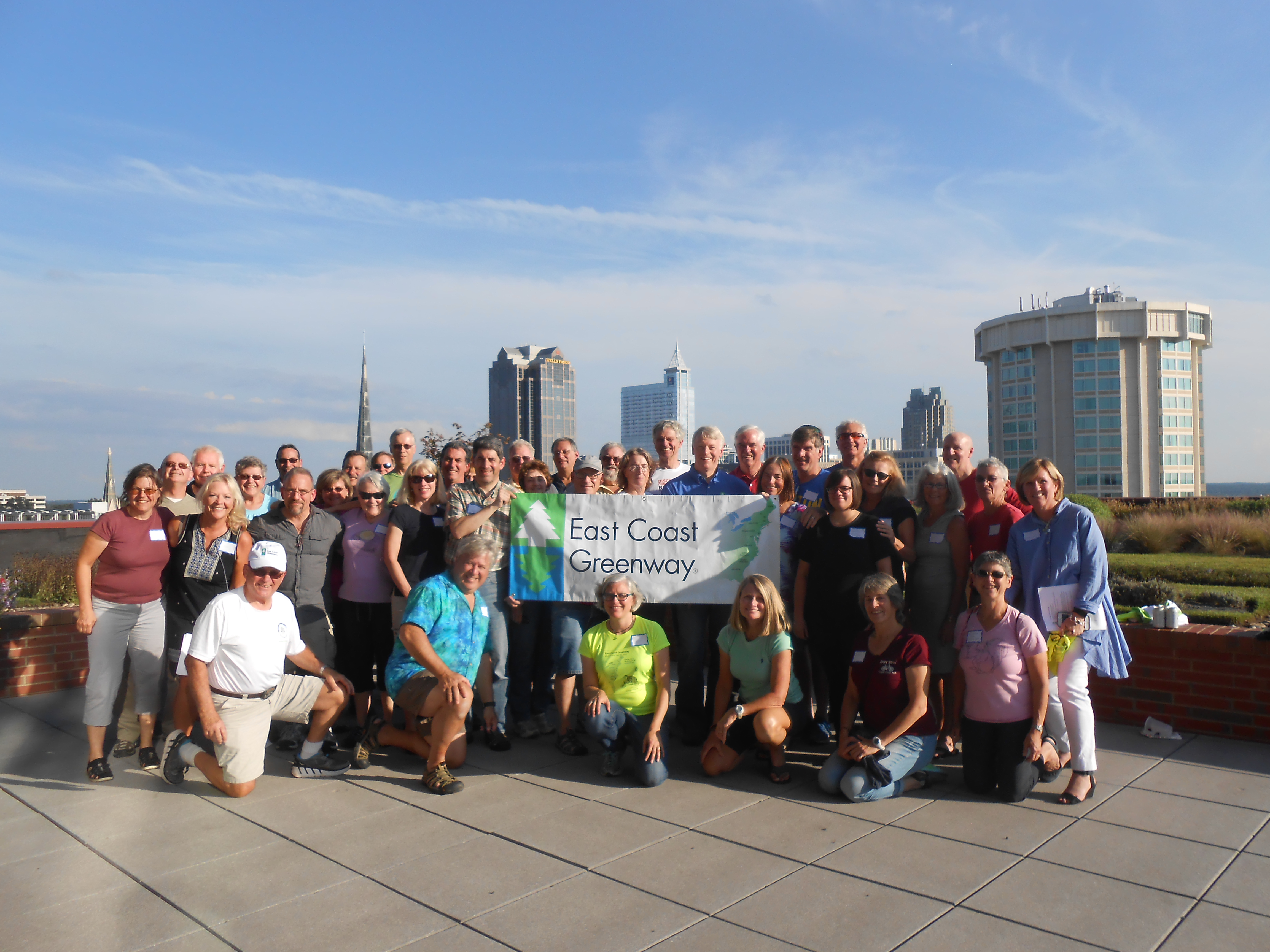
I’m getting away from a northern winter to join a small group exploring Mississippi on a bike. And no, this is not part of the East Coast Greenway.

Now Mississippi is a long state (more than five hours to drive from the state line with Memphis down to the Gulf of Mexico) and we only have four days, so I admit there’s some assists coming via a car. We’re going to skip some of the more obvious tourists sites (sorry Tupelo, Oxford and Natchez) and instead spend a good chunk of time on rail-trails you may not have heard of. And yes, the Natchez Trace.

As a Northener who has spent less than 24 hours in Mississippi until now (and that was only in October), I was shocked to learn this deep-red state has a pretty new 43-mile rail-trail that opened all at once. Quite a feat! Then we hear that the time between the railroad abandoning the line to Tanglefoot Trail opening was just 10 years (eight years if you start counting from the first meeting), and we’re all stunned by the speed. Oh, and it’s asphalt, so a lot more expensive than crushed stone.My town struggles to just put in sidewalks along a road to the train station (we’re starting year 5 – it could happen this year for the first five or six homes.)  And before you ask, 80% of the money came from the federal government (grant). Someone knew how to push the right buttons.

I intend to find out the full story — but I’m already hearing about the trail’s economic impact.

So here’s the basic itinerary:

Day 0: I’m on a rental bike because I couldn’t deal with shipping my bike and then needing to ship it back. But the others have brought their various fold-ups and spend time after dinner reassembling their bikes at a beautiful B&B while I … chat (what a surprise!).

Day 1: 43 miles on the Tanglefoot Trail (New Albany to Houston).

Day 2: 35-mile loop involving the Natchez Trace Parkway from Ridgeland, a bike-friendly suburb of Jackson, the state capital. Then another 27-mile section of the Natchez Trace from Rocky Springs to Windsor Ruins (what a name for a town!). The Natchez Trace is run by the National Park Service and runs from Nashville to Natchez. Until now, it’s the only place I knew about biking in Mississippi, and it’s a 50-mph road.

Day 3: 16 miles around Vicksburg National Military Park (can I just say I love the National Park Service?) and then 41 miles on the Longleaf Trail from Prentiss to Hattiesburg

Day 4: 28 miles along the Gulf coast.

Total is 200 miles, and no coincidence that this is Mississippi’s bicentennial year.

Rhode Island’s beautiful East Bay Trail!

Ride your bike by the water from Providence toward Bristol on this Rhode Island multi-use trail.

This trail runs 15 miles starting in Providence, Rhode Island, along the Narragansett Bay south to Bristol. The East Bay Trail connects to the main East Coast Greenway route, and we rode 10 miles of it while in Providence in mid-November. It’s an old railway line, so it’s flat. Yes, there’s wind to offset that. You’re always near the water, but it also runs past a supermarket. How cool is that — being able to get groceries via the trail? Continue reading “Rhode Island’s beautiful East Bay Trail!”

Construction sites along the East Coast Greenway

It’s inspiring to hear about parts of the East Coast Greenway that are now under construction.

trail-construction

I’m just back from the East Coast Greenway summit in Providence, Rhode Island. And while some participants couldn’t hold back on their disappointment over the presidential election, I prefer to focus on the inspiring developments I heard about.

There’s a huge amount of progress in creating the off-road network between Connecticut and Delaware in particular. Some of this is because the governors in both Connecticut and Delaware want the East Coast Greenway to be part of their legacy, as I’ve written before. So projects that have been in development are now close to the ribbon-cutting.

In Connecticut, almost 10 miles of trail will be completed this year and a minimum of another 20 miles next year. I saw many of those Connecticut projects on our long weekend there this summer (that’s where the photo is from), and hearing this makes me feel less disappointed that a Portland-to-Hartford ride will likely follow this year’s Calais-to-Portland ride in 2018, not 2017.

Bonus: a bridge over a highway is to be installed one Saturday night early next year (perhaps in April?) and since the road will be closed, why not celebrate there with a midnight street party? Plans are afoot, and I am waiting on the details.

In New Jersey, momentum seems to be building for two key projects, One is a much better route across the Meadowlands, from Jersey City to Newark, that will be called the Essex and Hudson Greenway. It’s gone from concept to the start of a feasibility study in less than a year, which is just amazing. The other is an off-road road from the Middlesex Greenway in Edison to the Raritan River in Highland Park, on the other side of New Brunswick. That would then link with the D&R Canal towpath. Middlesex County appears to be serious about this, so let’s see how long it takes.

Pennsylvania has 10 East Coast Greenway projects under construction this year (one of them is already done!), and another nine are in planning and engineering or ready for construction next year. One is the extension of the Schuylkill River Trail to Bartram’s Garden. There are projects planned in every county from the New Jersey line to the Delaware line, though I don’t know how much easier an off-road ride from Trenton to Philadelphia will become without more work.

In Delaware, there’s just been the groundbreaking for a trail close to 9 miles long connecting Wilmington to New Castle that will replace a hellish 9 miles of roadway.

A few developments away from the Connecticut-to-Delaware corridor:

  • Rhode Island voters just passed a $35 million green bond that includes $10 million for bike paths.
  • Washington D.C. has just about finished a 9-mile route along the south side of Anacostia River that the East Coast Greenway considers its complementary route. Still to work out is the link back to the National Mall. But when I look at the overall plan for the Anacostia River Walk, I understand the construction boom in Southeast that I saw from the highway on the way back from Raleigh. Trails are an ammenity and help bring economic development!
  • Florida is spending $25 million annually on trails, and East Coast Greenway segments are priorities.

Final photos from North Carolina

A last look at our hurricane-shortened bike ride along the East Coast Greenway.

This is (most of) the group as we gathered in Raleigh. No sign of the hurricane yet:

ecg-raleigh-group-shot

And where many of us went to dinner in Elizabethtown three days later:

ecg-elizabethtown-dinner3

ecg-elizabethtown-dinner2

ecg-elizabethtown-dinner1

Which set of wheels?

ecg-nc-which-bike

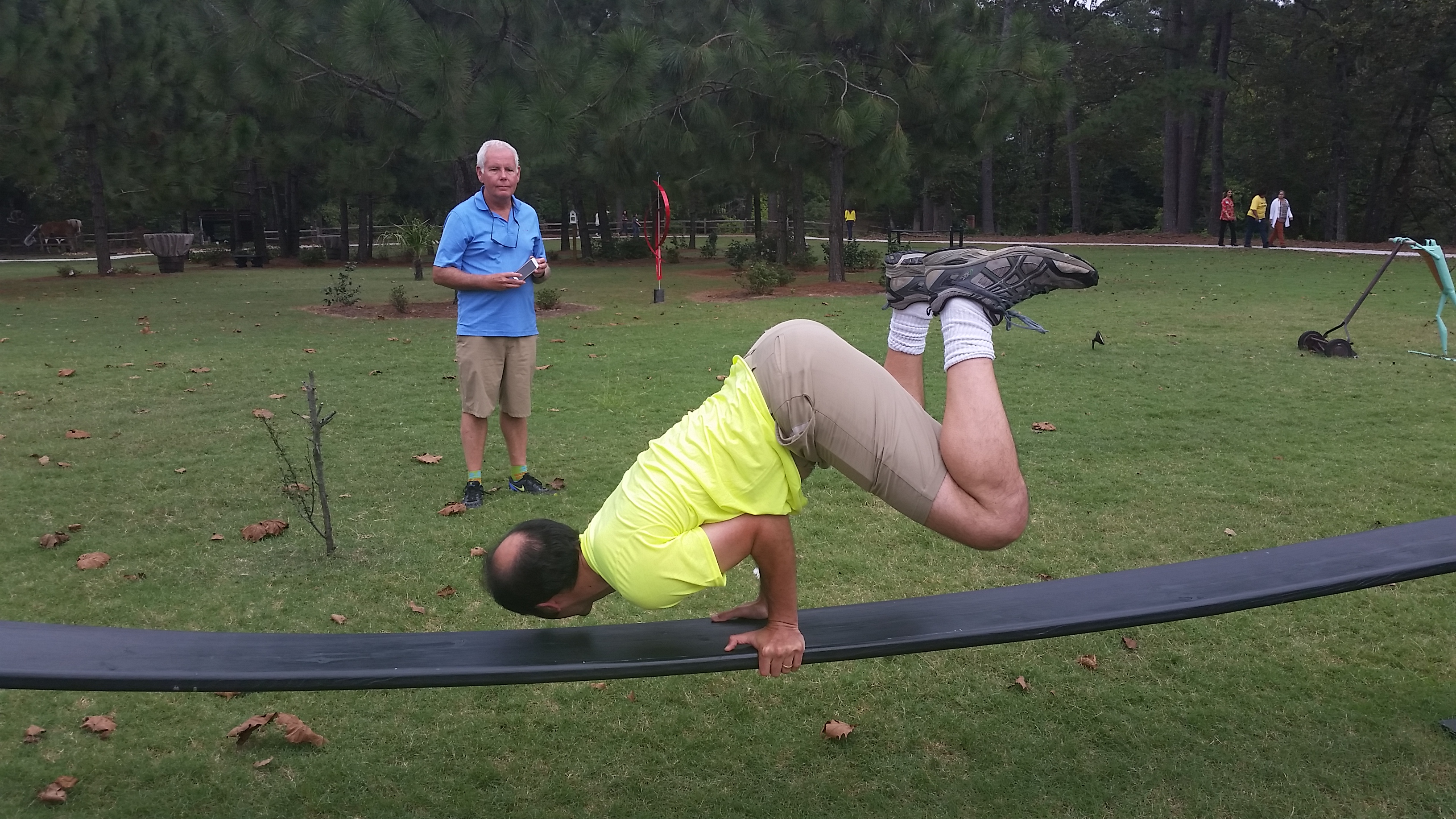
Dennis showing off his yoga skills on a bouncing “bonding board” at Cape Fear Vineyard and Winery in Elizabethtown:

ecg-dennis-yoga-skills

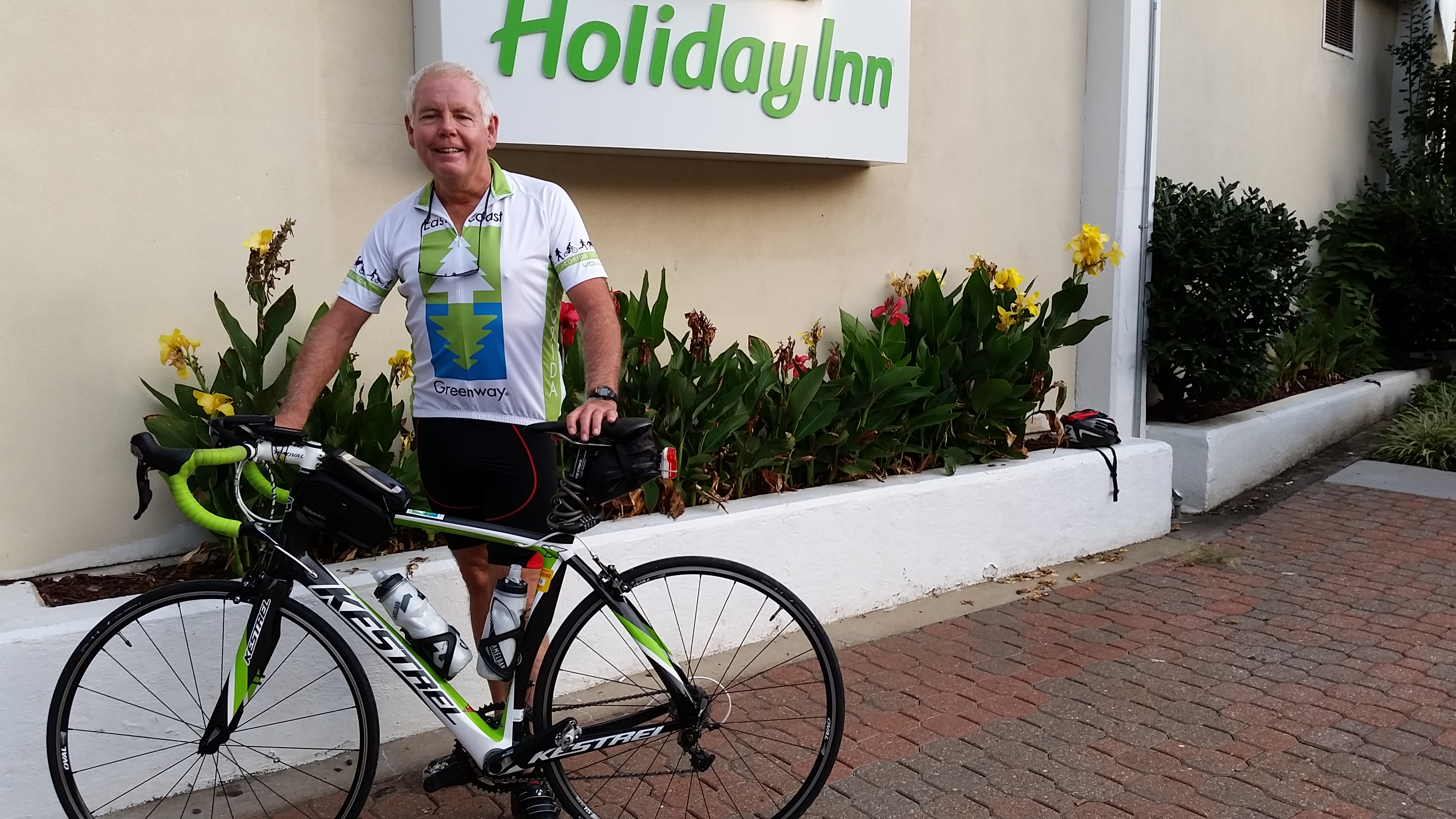
Chris’s bike matches the East Coast Greenway colors! (OK, also, Holiday Inn’s)

ecg-greenFor another perspective on our hurricane-shortened adventure on the East Coast Greenway, read this blog. The wind and rain is fierce in North Carolina today — we all know the ride had to end when it did. Here’s to sunshine next October as we head from the Wilmington area to … Savannah?

Once again, thank you to everyone who supported the East Coast Greenway through my fundraising efforts. I hope you’ll go enjoy your own bike adventure.

Bet you haven’t heard of this Revolutionary War battle in North Carolina

The battle at Moores Creek probably doesn’t get much attention beyond fourth-grade North Carolina history class. But it’s the colonists’ first victory.

ecg-moores-creekOur ride ended prematurely, as I mentioned earlier, at Moores Creek National Battlefield about 20 miles outside of Wilmington, NC. It bills itself as the first victory by the American colonists, in February 1776, and came more than four months before the Declaration of Independence. Depending on who you believe, the fighting lasted as little as three minutes (an early account) or 20 to 30 minutes (the volunteer at the visitors center).

This is a battle that I am guessing doesn’t get much attention beyond fourth-grade North Carolina history class. Basically, a group of Scottish loyalists needed to get to Wilmington to link up with the British. In their way were a few groups of patriots who came together at Moores Creek. The loyalist commander sent an emissary the night before saying give up and all will be forgiven … or else. And reported back that it was just a small group of fighters. The main group was actually across the bridge, and the small group moved there under the cover of night. So when the loyalists attacked just before dawn (with just broadswords, not guns!), well, it didn’t go well. It’s a really swampy area (this is the view from the boardwalk, not the bridge), so no one knows how many drowned as they fled.

ecg-moores-creek-swamp

Beyond the immediate victory, this battle undermined hopes that the South would side with Britain. Instead, North Carolina was one of the first to instruct its delegates to vote for independence a few months later.

Stopping at sites like this is part of what I enjoy about touring by bicycle. This is not the sort of National Parks Service site that draws lots and lots of visitors. How many will detour off Interstate 40 for this? But it’s on the East Coast Greenway. And I would have stopped even if it wasn’t the end of the ride.

Another factoid: in the aftermath, the patriots captured more than 15,000 pounds, which is nearly $14 million today (maybe I should say $13 million given the pounding sterling has just taken!).

The bridge itself has been replaced many times since the battle, most recently after Hurricane Floyd demolished it in 1999. Here’s hoping Hurricane Matthew doesn’t do the same.