 It’s impossible to be on the Mississippi Gulf Coast without talking about Katrina. Locals talk about before “the storm” and after. They all have stories — about a teacher who sought refuge in a school and the water line reached 5 1/2 feet and fish were swimming in the classroom, about the military memorabilia that ended up in another person’s yard and the owner couldn’t be tracked down, about homes needing to be gutted. The immediate impact of the widespread evacuations and decisions to start over elsewhere meant that in one school of 620 students, only 120 were back when it re-opened.
Today, nearly 12 years later, the number of households and jobs along the Mississippi Gulf Coast exceed those of before Katrina.
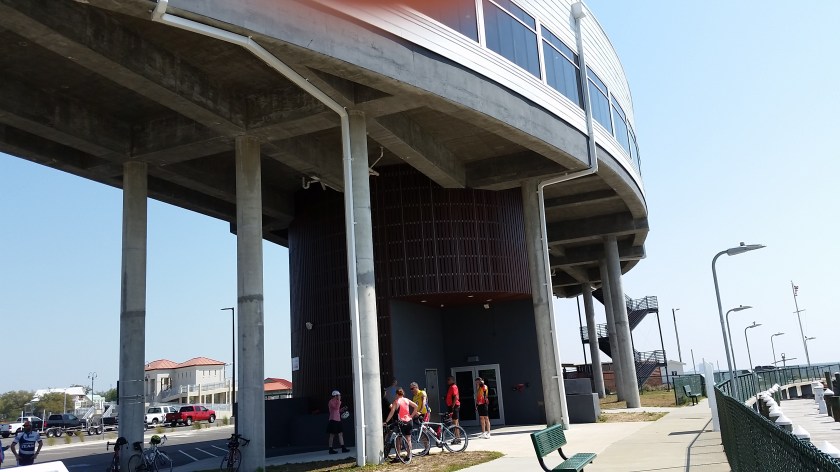
They’re still rebuilding in some spots. You see the occasional empty lot where a home once stood, and most buildings on the beach are no longer allowed. But while I saw plenty of homes and other buildings close to the water on stilts, I was surprised by how many are not.
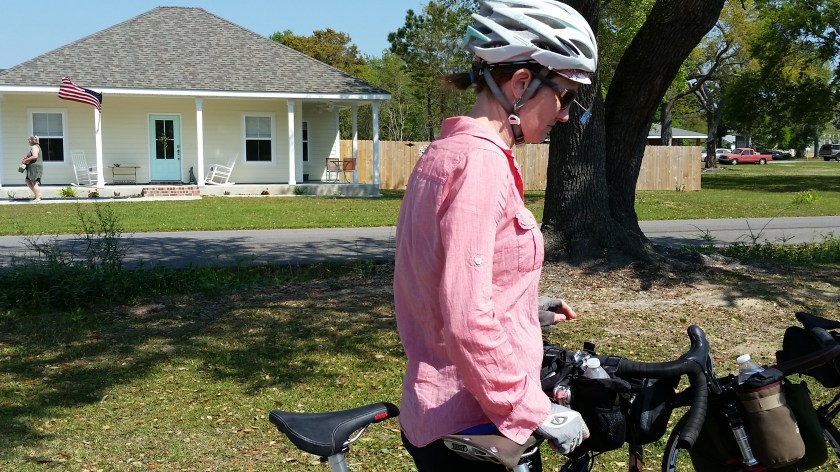
I heard that it was to do with where FEMA sets the flood zone, that if you don’t need mortgage insurance you can do as you please, even that insurance rates are coming down because new homes are being built better — hurricane-proof windows, reinforced frames and such. That may keep the wind from blowing off the roof or picking up the home and throwing it down somewhere else, but let me know how works out when the next big one comes and there’s widespread flooding.
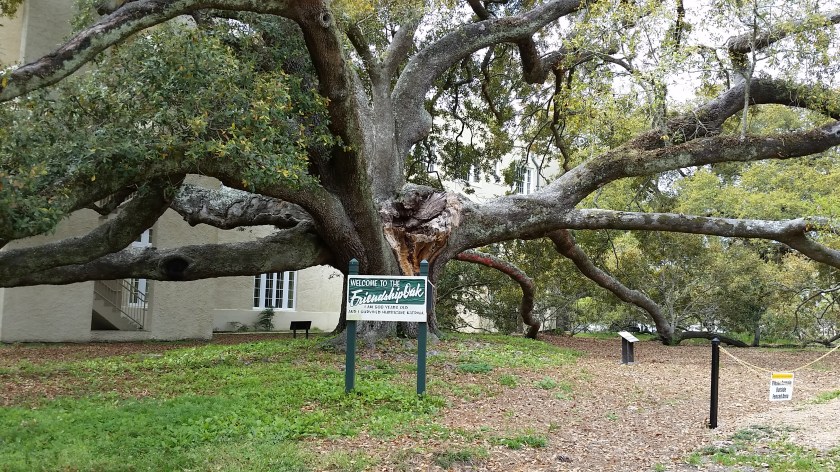 On the other hand, this 500-year-old oak, the “Friendship Oak” at the University of Southern Mississippi’s Gulf Coast campus with its 155-foot canopy, survived Katrina but lost a piece in a more recent storm.
 Thursday was spent along the
 Exploring by bicycle